When Lady Luck Turned Villain: The Pennsylvania Lottery Disaster That Destroyed a Town
The Number That Broke Everything
Most people dream about winning the lottery. But in Millville, Pennsylvania, that dream became a nightmare that tore apart families, friendships, and an entire community. All because of the number 666.
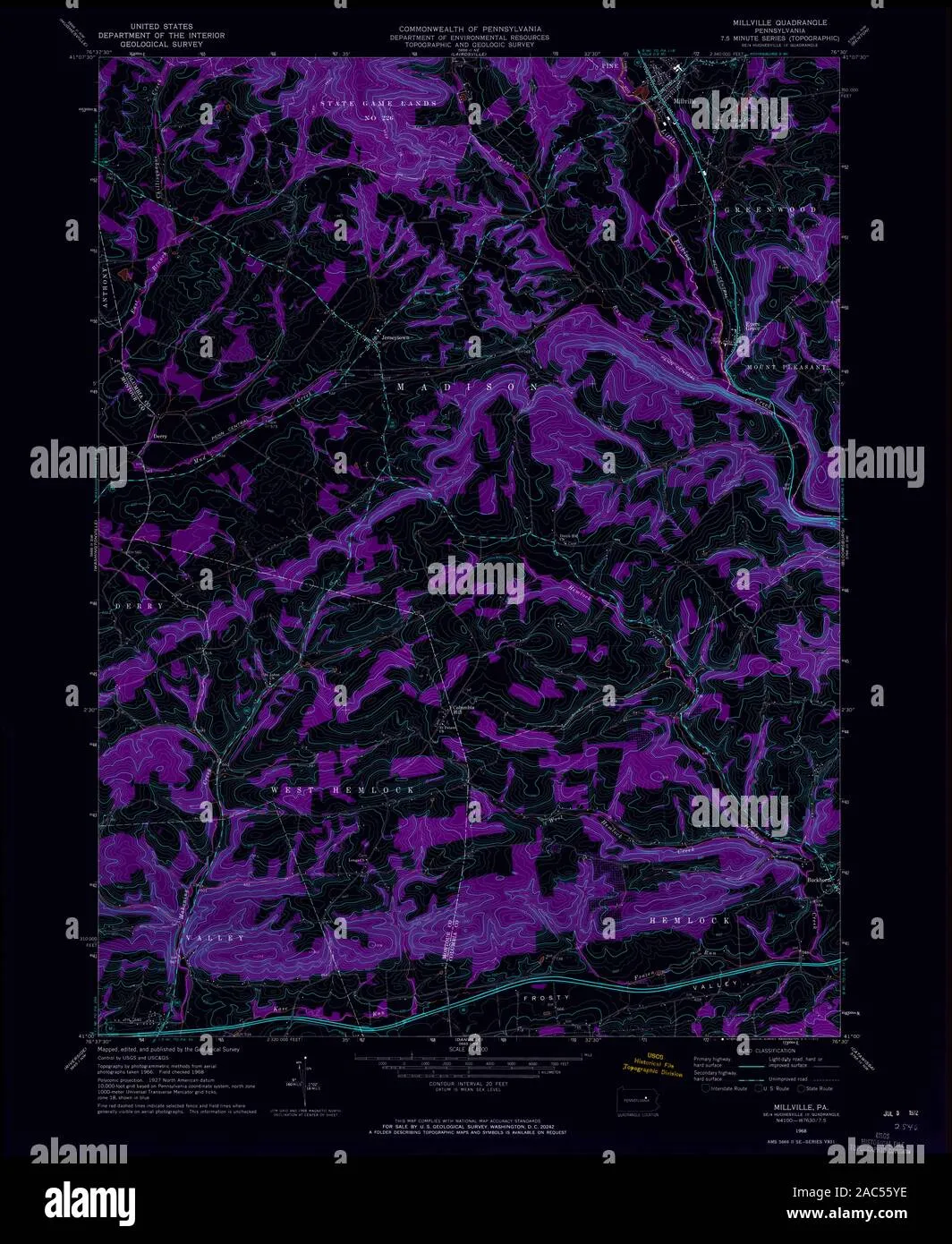 Photo: Millville, Pennsylvania, via c8.alamy.com
On April 24, 1980, something extraordinary happened in this town of 2,800 people. Not one, not ten, but 427 residents all picked the exact same three-digit number in the Pennsylvania Daily Number game. When 666 hit that evening, it should have been the greatest day in Millville's history.
Instead, it became the beginning of the end.
The Mathematical Impossibility
Here's what made this so bizarre: the odds of 427 people randomly selecting the same three-digit combination are roughly equivalent to being struck by lightning while being attacked by a shark during a solar eclipse. It simply doesn't happen.
Except it did.
The explanation was both simpler and stranger than anyone imagined. Millville had a local numbers runner named Eddie "The Book" Kowalski who had been taking bets for decades. Eddie was beloved in town—a friendly guy who knew everyone's kids' names and never missed a church bake sale.
But Eddie had one tiny problem: he was terrible at math.
The Miscalculation Heard 'Round Pennsylvania
For years, Eddie had been miscalculating the odds on certain number combinations. When people wanted to bet on 666—a popular choice because of its novelty—Eddie was charging them the same rate as any other number. In reality, the Pennsylvania Lottery Commission had classified 666 as a "premium number" with reduced payouts because so many people picked it.
 Photo: Pennsylvania Lottery Commission, via images.sigma.world
Eddie didn't know this. He kept offering full payouts on 666, essentially promising his neighbors free money without realizing it.
Word spread quietly through Millville. Your neighbor mentioned it to their cousin. The cousin told someone at work. Soon, half the town was in on what they thought was Eddie's generous spirit but was actually his mathematical blind spot.
The Day Everything Changed
When 666 hit on April 24th, Eddie's first reaction was joy for his neighbors. His second reaction, about thirty seconds later, was pure terror.
The total payout should have been around $50,000. Instead, Eddie owed his friends and neighbors $2.1 million. Money he didn't have. Money nobody had.
But here's where it gets really weird: Eddie had been operating as an official sub-agent for the Pennsylvania Lottery. Technically, the state was on the hook for his mistakes.
The Legal Avalanche
What happened next reads like a legal thriller written by someone with a dark sense of humor.
The Pennsylvania Lottery Commission initially refused to pay, claiming Eddie's operation was unauthorized. The 427 winners hired lawyers—some individually, some in groups, creating a maze of competing legal interests. Eddie hired his own lawyer to prove he was an official agent. The state hired a team of lawyers to prove he wasn't.
Meanwhile, Millville residents who hadn't won anything watched their neighbors gear up for legal war over money that might not exist.
When Neighbors Become Enemies
The legal battle revealed ugly truths about small-town life. Some winners accused others of cheating or getting inside information. Families split over whether to join class-action suits or go it alone. The local diner became a battleground where former friends refused to sit at the same counter.
Mary Kowalski (no relation to Eddie) had been best friends with Helen Novak for thirty years. Both had won, but Mary's lawyer told her that Helen's claim might reduce everyone else's payout. Their friendship ended in a screaming match at the post office that became local legend.
"I watched two women who had shared recipes and babysitting duties for three decades refuse to speak to each other over money they might never see," recalled local newspaper editor Tom Walsh. "It was heartbreaking."
The Pyrrhic Victory
After eighteen months of legal warfare, the courts reached a compromise that satisfied nobody. The state would pay out $1.2 million total—roughly $2,800 per winner. After legal fees, most people netted less than $1,500.
Eddie "The Book" Kowalski was banned from lottery operations for life and fined $50,000. He moved to Florida six months later, reportedly saying he "never wanted to see another number again."
The Aftermath
The real tragedy wasn't the money—it was what happened to Millville itself. The tight-knit community that had existed for generations simply evaporated. People moved away. Businesses closed. The annual Founder's Day festival was cancelled in 1981 and never resumed.
"We used to be the kind of place where everyone knew everyone," said longtime resident Patricia Mills in a 1985 interview. "After the lottery thing, we became the kind of place where everyone knew everyone's business, and nobody liked what they knew."
The local Catholic church, St. Mary's, saw its congregation drop by 40% as families left town or stopped speaking to each other. Father Michael O'Brien, who had served the parish for fifteen years, requested a transfer in 1983, citing "irreconcilable differences within the community."
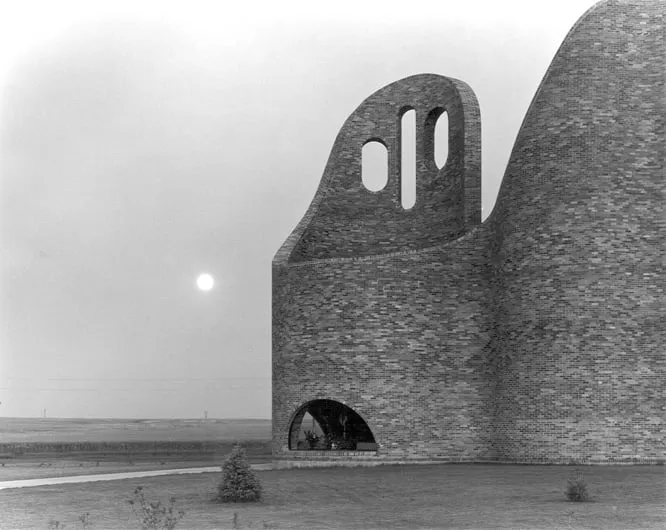 Photo: St. Mary's, via www.djcarchitect.com
The Devil's Number
The final irony? Many residents had chosen 666 specifically because they thought it was unlucky and therefore unlikely to be picked by others, which would mean a bigger payout if it hit.
They were right about the unlucky part.
Today, Millville is a shell of its former self. The population has dwindled to fewer than 1,200 people. Eddie's old corner store, where so many of those fateful lottery tickets were sold, is now a vacant lot.
But on April 24th each year, a few longtime residents still gather at Murphy's Tavern to raise a toast to the day their dreams came true and destroyed everything they cared about. Because sometimes, winning is the worst thing that can happen to you.