The Forgotten Warriors: When Peace Came and Nobody Sent the Memo
The Island That Time Forgot
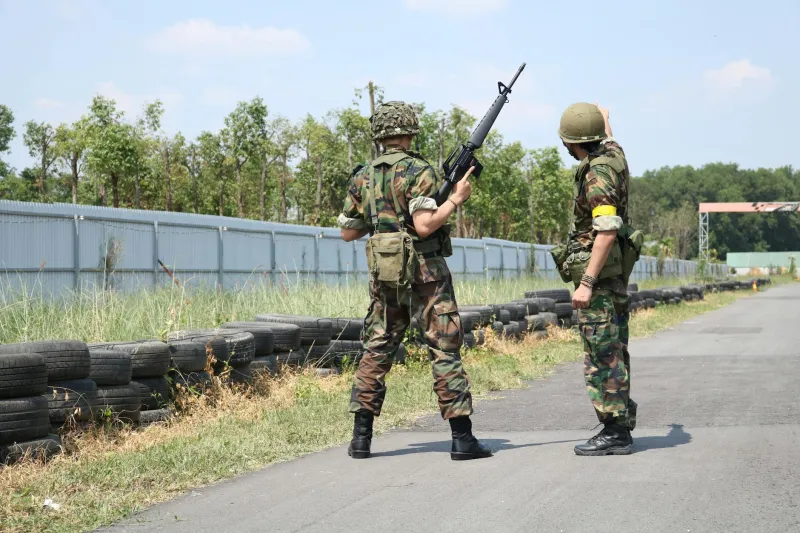
Picture this: you're stationed on a rocky outcrop in the Yellow Sea, dodging North Korean patrols and living off rice and determination. Your mission is crystal clear—disrupt enemy supply lines, gather intelligence, and hold your ground until further orders. The only problem? Those further orders never came.
While the rest of the world watched President Eisenhower sign the Korean Armistice Agreement on July 27, 1953, a small unit of guerrilla fighters continued their deadly game of cat and mouse on Baengnyeong Island. For eight more years.
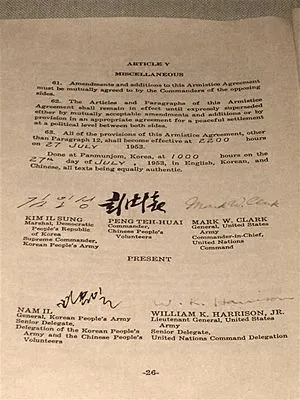 Photo: Korean Armistice Agreement, via kids.kiddle.co
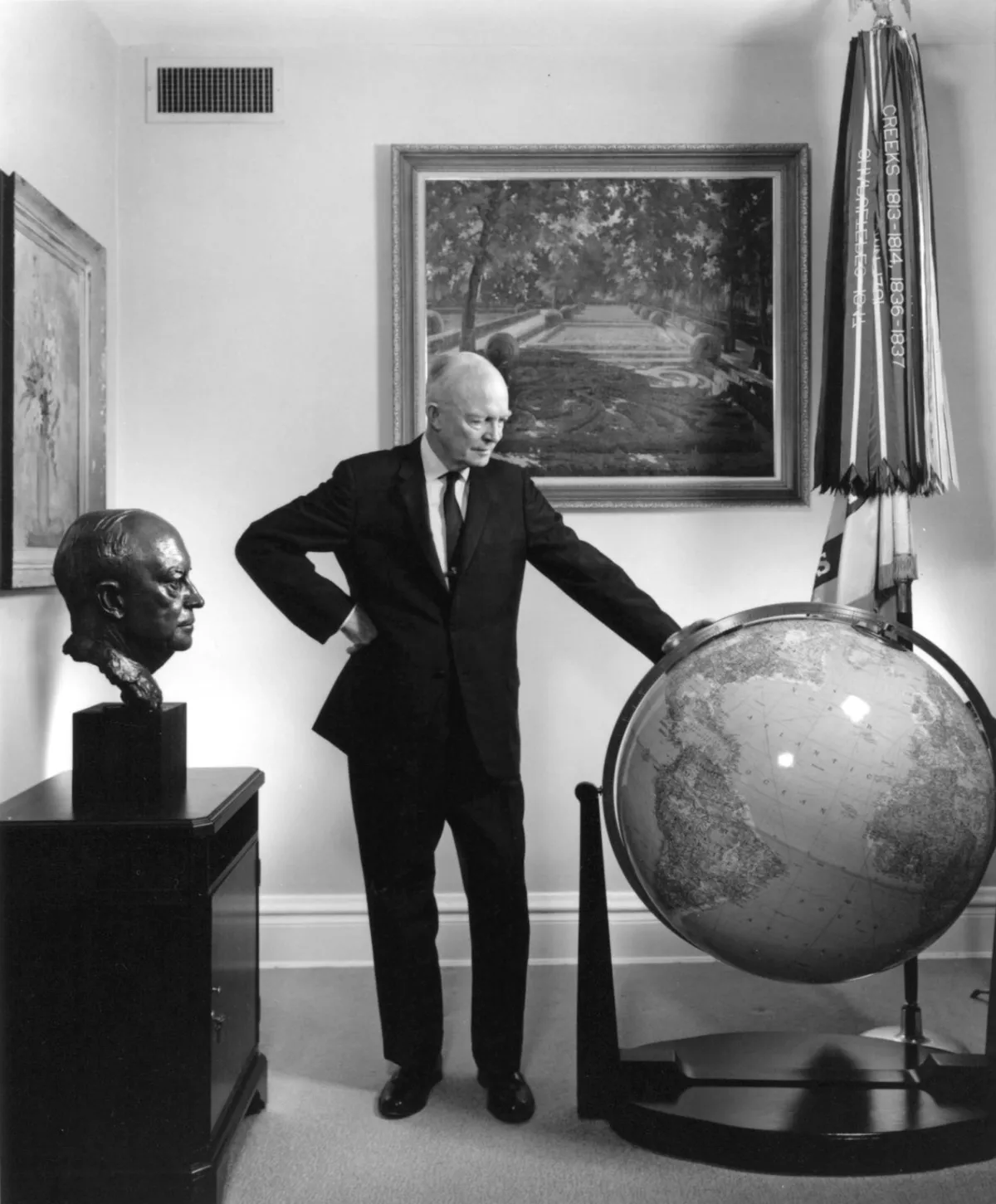 Photo: President Eisenhower, via karsh.org
 Photo: Baengnyeong Island, via www.shutterstock.com
When Bureaucracy Meets Warfare
The unit consisted of roughly 200 South Korean fighters backed by American intelligence and supplied through a complex web of CIA operatives and military contractors. Their job was simple in theory: make life miserable for Communist forces trying to move supplies through the area.
But here's where it gets weird. When the armistice was signed, someone forgot to tell them.
The communication breakdown wasn't intentional—it was pure bureaucratic chaos. The unit operated under such deep cover that their command structure had more layers than a wedding cake. Orders flowed through Seoul, then to Tokyo, then through various intelligence channels before reaching the island. Somewhere in that maze of military bureaucracy, the "war's over, come home" memo got lost in translation.
Literally.
The Language of Confusion
Most of the fighters spoke only Korean, while their American handlers communicated in English. Critical updates were supposed to be translated by a single liaison officer who, as luck would have it, was reassigned to another post just weeks before the armistice. His replacement never showed up.
So when radio chatter mentioned something about a "temporary cessation of hostilities," the fighters assumed it meant a brief tactical pause—not the end of the entire conflict. They kept their weapons clean and their eyes on the horizon, waiting for the next phase of operations.
Life in a Time Warp
For eight years, these men lived like it was still 1953. They conducted nighttime raids on North Korean positions that had long since been abandoned. They radioed intelligence reports about troop movements that were actually just fishing boats. They rationed supplies that kept arriving through automated delivery systems nobody had bothered to shut down.
The absurdity reached peak levels when they began fighting South Korean forces who were trying to establish a civilian fishing operation in "their" territory. The guerrillas assumed these were Communist infiltrators in disguise and engaged them accordingly.
The Awakening
The truth finally came to light in 1961 when a new CIA operative arrived for what he thought was a routine inspection. Instead, he found a fully operational military unit still fighting a war that had been over since the Eisenhower administration.
The conversation, according to declassified documents, went something like this:
"Status report, soldier."
"Sir, enemy activity has decreased significantly, but we maintain readiness for the next offensive."
"What next offensive? The war ended eight years ago."
Silence.
The Strangest Homecoming
Decommissioning the unit proved almost as complicated as running it. Many of the fighters had been declared missing in action by their families. Some had been officially listed as dead. A few had been posthumously awarded medals for their "ultimate sacrifice."
Worse, eight years of isolation had created its own micro-culture. The men had developed their own protocols, their own chain of command, and their own understanding of the mission that bore little resemblance to original orders.
When officials finally convinced them the war was over, several fighters initially refused to leave. The island had become their entire world, and the idea of returning to a South Korea they no longer recognized seemed more terrifying than staying put.
Cold War Chaos
This wasn't just bureaucratic incompetence—it was a symptom of how the Cold War operated. Intelligence agencies were running so many covert operations that keeping track of them all became impossible. Units like this one existed in a gray area between official military command and plausible deniability.
The Korean conflict officially ended, but dozens of similar operations continued throughout Asia, some legitimate and some simply forgotten. This particular unit just happened to be the most spectacularly overlooked.
The Ultimate Irony
The strangest part? During their eight-year overtime shift, the unit actually accomplished its mission better than anyone expected. Their continued presence deterred several North Korean reconnaissance missions and kept shipping lanes clear for South Korean fishermen.
They were fighting a war that was over, but they were winning it.
When the last fighter finally left Baengnyeong Island in late 1961, he reportedly looked back at the rocky outcrop and said, "I still don't understand why we're surrendering when we were winning."
Sometimes the most effective soldiers are the ones who don't know when to quit—even when they probably should.