The Tooth Puller Who Pulled a Trigger: How a Dying Dentist Became the West's Most Unlikely Legend
The Tooth Puller Who Pulled a Trigger: How a Dying Dentist Became the West's Most Unlikely Legend
There is a version of the O.K. Corral gunfight that most Americans carry around in their heads. It involves two sides squaring off at high noon in a dusty street, hands hovering over holsters, while a crowd holds its breath. It is cinematic, symmetrical, and almost entirely invented.
The real story involves a dying man who studied dentistry in Philadelphia, a confrontation that lasted somewhere between twenty and thirty seconds, and a location that was not actually the O.K. Corral.
A Degree He Could Barely Use
John Henry Holliday graduated from the Pennsylvania College of Dental Surgery in 1872. He was twenty years old, technically accomplished, and already coughing.
The diagnosis was tuberculosis — consumption, as people called it then — and it arrived with a grim prognosis. Doctors advised him to head somewhere dry and warm. He landed in Dallas, opened a dental practice, and quickly discovered the particular cruelty of his situation: a man with chronic lung disease spending his days breathing directly over open mouths was not going to last long in the profession.
So he pivoted. Gambling, it turned out, required no proximity to anyone's airways. Holliday had a sharp mind, steady hands, and absolutely nothing to lose, which made him a formidable card player and a dangerous man to cross. He drifted through frontier towns — Denver, Dodge City, Las Vegas, New Mexico — accumulating a reputation that had nothing to do with bicuspids.
By the time he arrived in Tombstone, Arizona in 1880, Doc Holliday was already half legend. He was also, by most accounts, genuinely unwell — thin, pale, and drinking heavily, which was one of the era's optimistic treatments for tuberculosis.
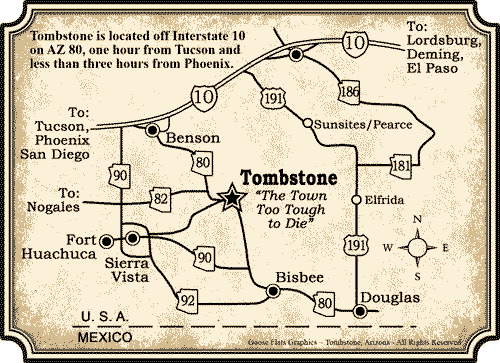 Photo: Tombstone, Arizona, via tombstonewalkingtours.com
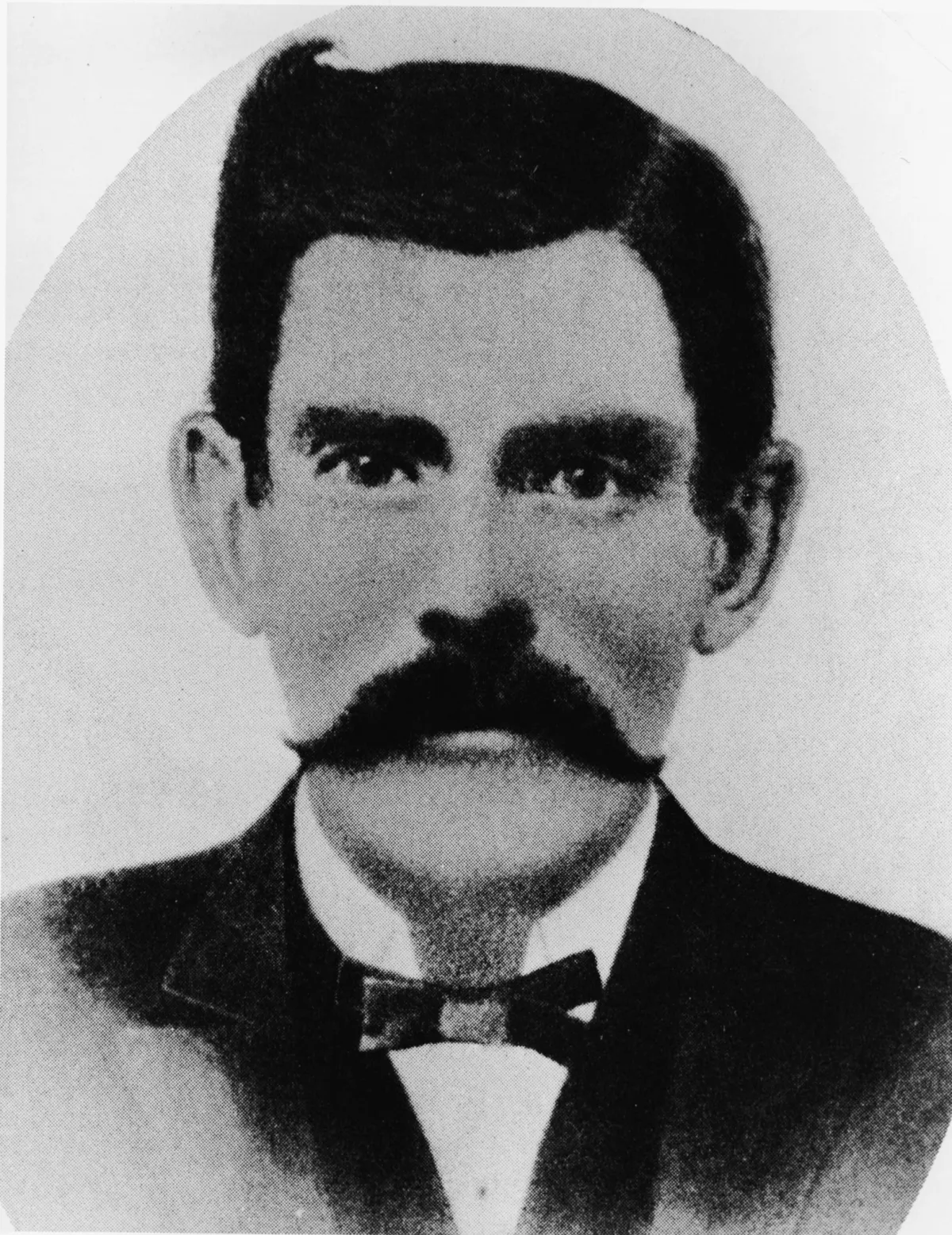 Photo: Doc Holliday, via www.historynet.com
Tombstone Was Already Trouble
Tombstone in 1881 was a silver boomtown with a population that had exploded past 10,000 people and a civic atmosphere that could charitably be described as tense. The Earp brothers — Virgil, Morgan, and Wyatt — represented law enforcement. A loose confederation of ranchers and rustlers known as the Cowboys, including the Clanton and McLaury families, represented the opposition.
The two camps had been circling each other for months. There were stolen horses, threats, accusations, and a general atmosphere of grievance that made conflict feel inevitable. On October 26, 1881, it stopped feeling inevitable and started being actual.
The confrontation happened not inside the O.K. Corral but in a narrow vacant lot behind Camillus Fly's photography studio, roughly a half-block away. The name stuck because it was more dramatic, which tells you most of what you need to know about how this story got remembered.
Thirty Seconds of Chaos
When the shooting started, there were nine men in that lot. Four of them — Wyatt, Virgil, and Morgan Earp, plus Doc Holliday — represented the law. Five of them — Ike and Billy Clanton, Frank and Tom McLaury, and Billy Claiborne — did not.
Ike Clanton, notably, ran almost immediately. Billy Claiborne followed. What remained was a close-quarters exchange that witnesses described as confusing, overlapping, and over before most people had fully processed that it had begun.
When the smoke cleared — and it cleared fast — Billy Clanton and both McLaury brothers were dead. Virgil and Morgan Earp were wounded. Wyatt was unharmed. Doc Holliday had a graze wound on his hip, though accounts differ on whether it was a bullet or a piece of flying debris.
Holliday's exact role in the shooting has been debated ever since. He was carrying a shotgun and a nickel-plated revolver. Witnesses disagreed about who fired first, who fired most, and who hit what. The legal proceedings that followed — the Earps and Holliday were actually charged with murder — produced testimony so contradictory that it remains genuinely difficult to reconstruct a clean sequence of events.
The charges were eventually dismissed. The mythology was just getting started.
The Legend Factory
What happened next is, in some ways, more interesting than the gunfight itself. Dime novels, newspaper dispatches, and eventually film turned thirty seconds of chaotic frontier violence into the defining image of American justice in the West. The Earps became heroes. The Cowboys became villains. Holliday became the loyal, world-weary gunfighter with the sardonic wit and the tragic backstory.
None of the actual participants would have entirely recognized the story being told about them. Wyatt Earp spent decades of his later life actively cultivating his own legend, giving interviews and befriending Hollywood figures. Doc Holliday, who died of tuberculosis in a Colorado sanitarium in 1887 — just six years after the gunfight — never got the chance.
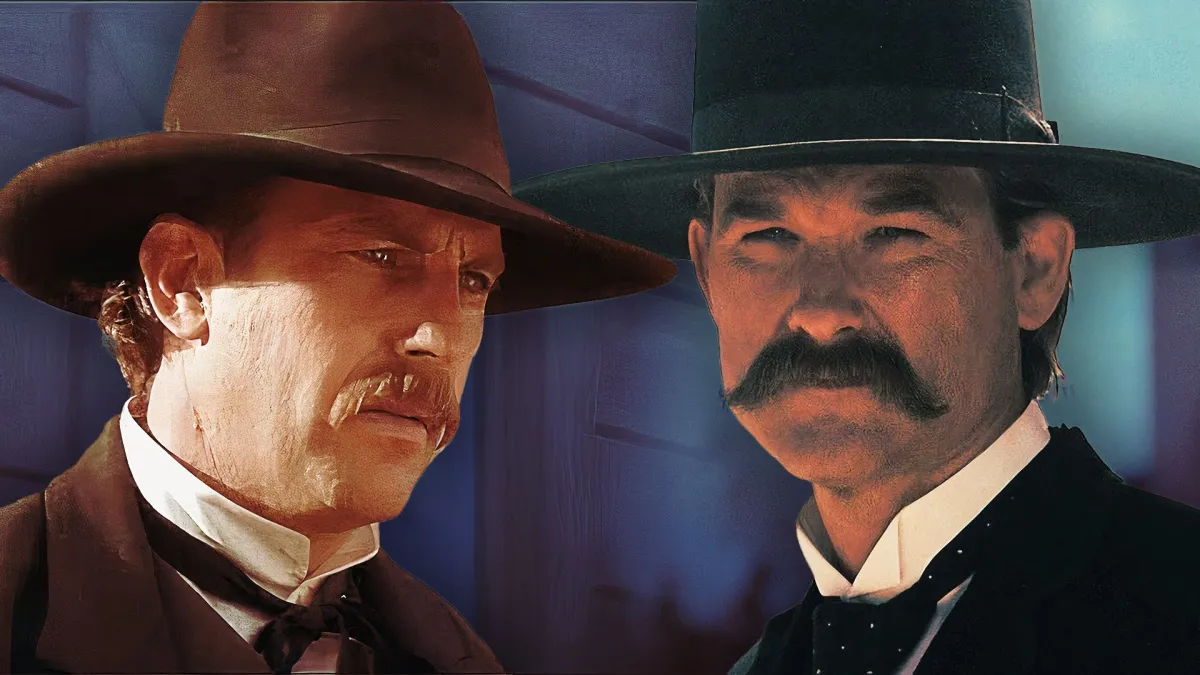 Photo: Wyatt Earp, via static1.moviewebimages.com
He was thirty-six years old. He had reportedly remarked, looking down at his bare feet on his deathbed, that dying in bed was funny, given everything. He had always assumed a bullet would get him first.
The Strange Logic of Frontier Fame
What makes the Holliday story genuinely strange is the arc of it. A man trains for a careful, precise, intimate profession. Disease takes that profession away. He spends a decade wandering toward death, picking up a gunfighter's reputation almost incidentally. Then, almost by accident, he ends up at the center of a thirty-second event that gets retold for the next 140 years.
The O.K. Corral was not the West's deadliest gunfight. It was not even particularly well-aimed — most of the shots missed. But it had the right combination of named participants, existing tensions, and a town with a newspaper that knew how to write a story.
Doc Holliday, the dentist who became a gambler who became a legend, probably would have found the whole thing absurd. He was, by all accounts, a man who appreciated irony.
He had plenty to work with.