The Six-Month Canadian Vacation Nobody Planned: When the U.S. Army Accidentally Set Up Camp in the Wrong Country
The Training Exercise That Went International
In the early days of the Cold War, when every military exercise carried the weight of global tension, precision was supposed to be everything. Maps were checked, coordinates were verified, and borders were respected. Unless, of course, you were part of the 47th Engineering Battalion, who in 1952 managed to accidentally invade Canada and conduct military operations on foreign soil for six months without anyone noticing.
It started as a routine cold-weather training mission in northern Minnesota, near the Boundary Waters. Captain James "Dutch" Kowalski received orders to establish a temporary base camp for winter survival exercises, complete with specific coordinates that would place his 23-man unit safely within U.S. territory. What nobody realized was that the maps they were using dated back to 1898, and the border markers referenced in those coordinates had long since been moved during a quiet boundary adjustment in 1925.
 Photo: Boundary Waters, via i.pinimg.com
Setting Up Shop in the Great White North
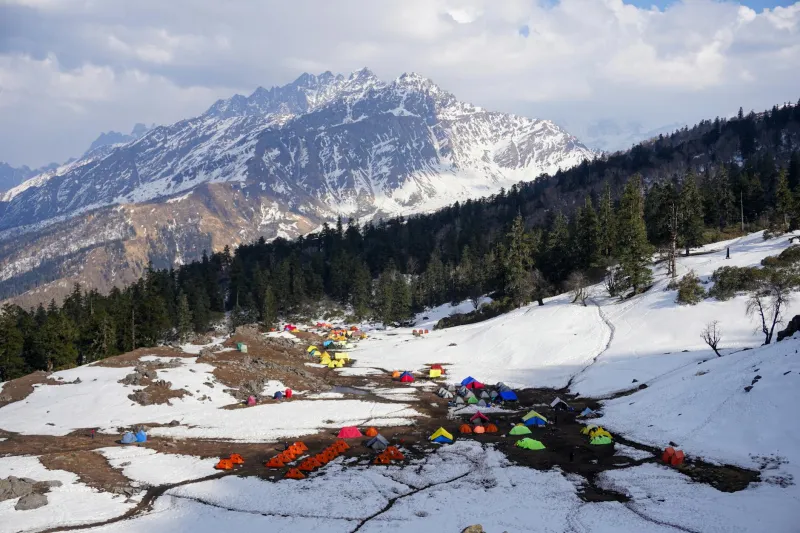
The battalion arrived in November 1952, trucking through snow-covered logging roads to what they believed was a remote section of the Superior National Forest. They found the perfect spot: a cleared area near a frozen lake, surrounded by dense pine forest that would provide excellent cover for their exercises. Within a week, they had established Camp Frostbite (the soldiers' unofficial name), complete with insulated tents, a field kitchen, and a communications post.
 Photo: Superior National Forest, via png.pngtree.com
For the next six months, the 47th conducted training exercises that would make any military manual proud. They practiced winter warfare tactics, cold-weather survival techniques, and radio communications in extreme conditions. They built snow shelters, conducted night marches, and even staged mock battles against "enemy forces" (actually other units rotating in for shorter training periods).
What made the situation even more absurd was how well everything went. The men adapted quickly to the harsh conditions, their equipment performed flawlessly, and morale remained surprisingly high despite temperatures that regularly dropped below -30°F. Captain Kowalski's reports back to headquarters glowed with praise for the training site's suitability.
The Neighbors Nobody Met
The reason nobody discovered the mistake sooner was simple: they had accidentally invaded one of the most remote corners of Ontario, a region so sparsely populated that their nearest neighbor was a trapper named François Dubois who lived twelve miles away and only visited his cabin every few weeks. When Dubois did spot smoke from the American camp during one of his winter rounds, he assumed it was another trapper or perhaps researchers from the University of Toronto.
Meanwhile, back in Minnesota, local residents occasionally wondered about the military trucks they saw heading north, but figured it was just another training exercise. The U.S. Forest Service had been notified about the operation, so they weren't concerned about the lack of visible activity in what they thought was the designated training area.
The Discovery That Changed Everything
The truth came to light in May 1953, when Canadian surveyor Malcolm MacPherson was conducting a routine boundary survey for a proposed logging operation. MacPherson was using modern GPS coordinates (a relatively new technology at the time) when he stumbled across what appeared to be a small military installation on Canadian soil.
At first, MacPherson thought he had made an error. He rechecked his instruments, consulted multiple maps, and even hiked to the nearest official border marker – a concrete post installed in 1925 that clearly placed the American camp about three miles inside Canada. Realizing he had discovered an international incident in the making, MacPherson did what any reasonable Canadian would do: he politely introduced himself to the Americans and offered to help sort out the confusion.
The Most Canadian Response Ever
Captain Kowalski's reaction to learning he had been commanding foreign territory for six months was reportedly unprintable. MacPherson's report to Canadian authorities was a masterpiece of diplomatic understatement: "American military personnel appear to have established temporary facilities slightly north of the intended location. Suggest quiet resolution to avoid embarrassment for all parties."
What followed was perhaps the most cordial international incident in modern history. Canadian officials contacted their American counterparts through diplomatic channels, but the tone was less "you invaded our country" and more "you left your car parked in our driveway, but don't worry about it."
The official Canadian response, delivered through the embassy in Washington, read in part: "The Government of Canada acknowledges that U.S. military personnel may have inadvertently conducted training exercises in Canadian territory. We regret any inconvenience caused by our failure to bring this matter to American attention sooner."
Read that again: Canada apologized for not mentioning that America had invaded them.
The Cleanup Operation
The 47th Engineering Battalion packed up Camp Frostbite in late May 1953, leaving the site cleaner than they found it. True to military environmental protocols, they removed all equipment, filled in latrines, and even replanted areas where their vehicles had disturbed the ground cover.
Both governments agreed to classify the incident as a "navigation error during joint training exercises," which technically wasn't even a lie since Canada retroactively declared the exercises to have been jointly approved. No money changed hands, no formal apologies were issued, and no diplomatic notes were exchanged.
The Aftermath Nobody Talks About
The story might have remained completely classified if not for François Dubois, the trapper who had spotted the camp months earlier. When he learned what had happened, Dubois mentioned it to friends at a tavern in Thunder Bay, and the tale gradually spread through northern Ontario's close-knit community of outdoorsmen and loggers.
By the 1960s, it had become local folklore, and by the 1980s, historians began tracking down the participants for oral history projects. Captain Kowalski, reached for comment in 1987, reportedly laughed and said, "Best training exercise we ever ran. Too bad we can't go back."
Malcolm MacPherson, the surveyor who discovered the situation, became something of a celebrity in Canadian surveying circles. He kept the original coordinates and maps from the incident, which are now displayed at the Ontario Land Surveyors Association headquarters in Toronto.
A Friendship Forged in Snow
Perhaps the most remarkable aspect of this accidental invasion was how it reinforced the unique relationship between the United States and Canada. In an era when border crossings were taken seriously and Cold War tensions made everyone paranoid about military movements, two nations managed to handle a potentially explosive situation with humor, discretion, and mutual respect.
The site of Camp Frostbite is now part of Quetico Provincial Park, marked only by a small plaque that reads: "In recognition of international friendship and the occasional importance of accurate maps." Visitors who know the story sometimes leave small American flags at the site, which park rangers quietly collect and pass along to the U.S. consulate in Toronto.
 Photo: Quetico Provincial Park, via c8.alamy.com
It's a reminder that sometimes the best international relations happen not in embassy conference rooms, but around a campfire where neighbors help neighbors figure out exactly whose backyard they're sitting in.