She Rescued 77 People from Drowning. The Government Didn't Think That Was Enough to Pay Her Fairly.
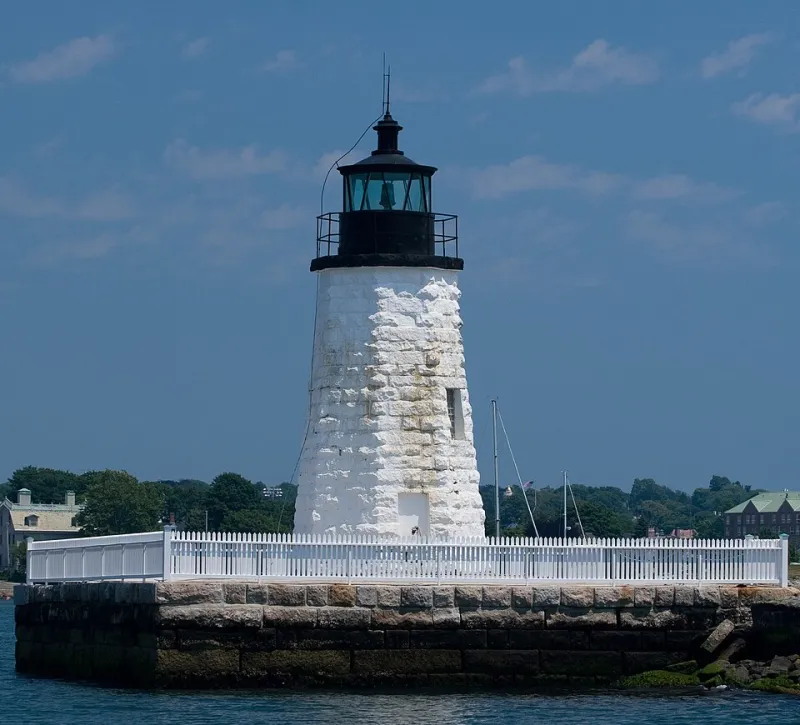
Photo: Kenneth C. Zirkel, CC BY-SA 3.0, via Wikimedia Commons
In the summer of 1869, a journalist from a major New York newspaper made the trip to Newport, Rhode Island, specifically to interview a lighthouse keeper. This was not the kind of story that usually warranted that kind of attention. Lighthouse keepers were federal employees doing unglamorous maintenance work on the New England coast — not exactly front-page material.
 Photo: Newport, Rhode Island, via linksmagazine.com
But Ida Lewis was not exactly a typical lighthouse keeper.
 Photo: Ida Lewis, via png.pngtree.com
By the time that journalist arrived, Lewis had already pulled multiple people from the waters of Newport Harbor using a wooden rowboat she handled largely alone. She was twenty-six years old. She had been doing this since she was a teenager. And she had done it in weather that experienced sailors refused to go out in.
The story that ran afterward made her famous across the country. What it couldn't fix was her paycheck.
Growing Up on the Water
Ida Zoradia Lewis was born in 1842 in Newport, and her connection to Lime Rock Lighthouse began when she was fifteen years old. Her father, Captain Hosea Lewis, was appointed keeper of the light — a small station sitting on a rocky outcropping in Newport Harbor, accessible only by boat. When her father suffered a debilitating stroke shortly after the appointment, Ida took over his duties.
 Photo: Lime Rock Lighthouse, via www.butter-n-thyme.com
She wasn't officially the keeper. She was a teenage girl doing a federal employee's job without a federal employee's title, pay, or recognition. She rowed her siblings to school on the mainland every day. She maintained the light. She learned the harbor's moods in every season and every weather condition.
She also started pulling people out of the water.
The Rescues
The first documented rescue came in 1854, when Lewis was just twelve years old — she pulled four young men from the harbor after their sailboat capsized. Whether this counts in the official tally of her rescues depends on the source, but it established a pattern that would define the next fifty years of her life.
The rescues that made her nationally famous came in 1869. In February of that year, she went out in a violent winter storm to save two soldiers whose boat had overturned. The conditions were severe enough that witnesses on shore weren't certain she would make it back. She did — with both men alive.
That rescue, combined with the earlier ones, prompted a wave of national press coverage. Harper's Weekly ran an illustration of her rowing through rough water. The New York newspapers sent reporters. She received a letter from President Ulysses S. Grant, who visited her personally that summer along with a crowd of admirers that reportedly stretched the length of Newport's waterfront.
The Army and Navy Journal called her the bravest woman in America. The Life Saving Benevolent Association of New York sent her a gold medal and $100 — a substantial sum at the time. Letters arrived from across the country. Women's groups held her up as a symbol of capability and courage.
The federal government gave her a small pay raise and continued to list her father as the official keeper of record.
The Bureaucratic Logic That Defied All Logic
This is where the story stops being simply inspiring and starts being genuinely maddening.
For years after her rescues made her a household name, the U.S. Lighthouse Board — the federal agency responsible for lighthouse administration — declined to formally appoint Ida Lewis as keeper of Lime Rock. The reasons were never stated with complete clarity, but they didn't need to be. The position was considered a man's job. The pay was set accordingly. Women who performed the duties were accommodated within the existing framework, which meant they were often listed as assistants, or their male relatives remained the nominal keepers of record even when incapacitated.
Her father died in 1872. Her mother had been serving as the nominal keeper since his stroke. When her mother's health also declined, Ida was finally officially appointed keeper of Lime Rock — in 1879, twenty-five years after she had first begun performing the duties and a decade after she had become one of the most famous women in the country.
Her salary at the time of her appointment was $500 per year. Male keepers at comparable stations were earning more.
Fame Without Corresponding Fortune
The gap between Ida Lewis's public reputation and her institutional treatment is one of the more surreal features of her story. She received fan mail from across the country. Susan B. Anthony and other leading suffragists cited her as proof of women's capability in physically demanding roles. The U.S. Life-Saving Service presented her with its highest honor. Generals, senators, and at least one sitting president made the trip to Newport specifically to meet her.
She stayed at Lime Rock. She kept rowing. She kept pulling people out of the water.
The total count of lives she saved over her career is typically recorded as 18 confirmed rescues, though some accounts credit her with as many as 25 direct saves — and the broader estimate of 77 lives includes those she assisted or contributed to saving through various means over her decades at the lighthouse. The numbers vary by source, but by any count, the record is extraordinary.
In 1881, Congress awarded her a gold lifesaving medal — the first woman to receive the honor. It was a genuine acknowledgment of her service, and she was proud of it. It did not come with a salary adjustment.
The End of a Remarkable Life
Ida Lewis tended Lime Rock Lighthouse until a stroke left her incapacitated in October 1911. She died later that same month, still at the lighthouse, at the age of 69. Newport's flags flew at half-staff. Boats in the harbor sounded their horns in tribute.
The lighthouse was renamed Ida Lewis Rock Lighthouse in 1924 — thirteen years after her death, which was itself a kind of institutional metaphor. Recognition came, as it so often did for her, slightly too late and slightly short of what the moment deserved.
Today, the Ida Lewis Yacht Club occupies the former lighthouse station, and her story is well-documented in Newport's local history. She is remembered as a genuine American hero — which she was, by any honest measure.
The federal government eventually agreed. It just took them about fifty years to say so out loud.