The Dinosaur That Was Never Quite One Dinosaur: The Skeleton That Fooled Museum Visitors for Decades
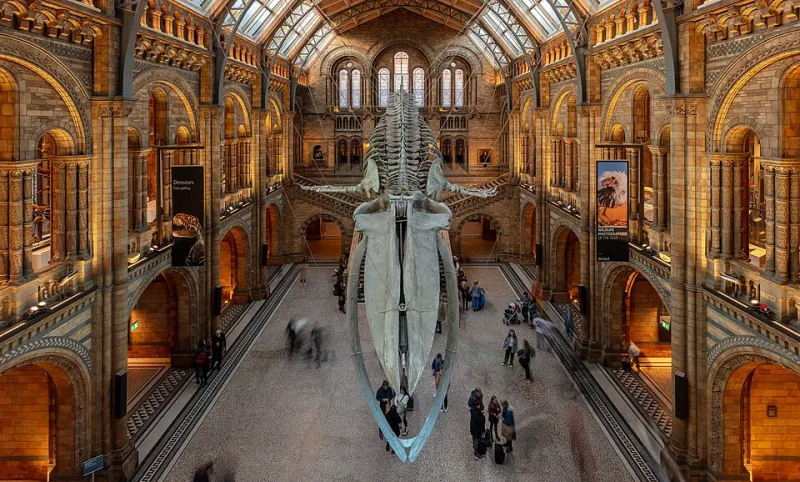
Photo: Diego Delso, CC BY-SA 4.0, via Wikimedia Commons
There is a particular kind of confidence that museum displays project. The lighting is dramatic. The placard is authoritative. The skeleton looming above you is presented as a fact of deep time, a direct window into a world that existed long before humans were around to misrepresent it. You trust it because it's in a museum, and museums, you assume, have checked.
Sometimes they've checked. Sometimes they've done something more pragmatic: they've made their best available guess, mounted it on a steel armature, and opened the doors to the public.
The Problem With Assembling an Extinct Animal
Paleontology in the early twentieth century was a science in a hurry. The great fossil rush of the late 1800s had produced spectacular finds — entire institutional reputations were built on the bones pulled from the Morrison Formation and the Hell Creek beds of the American West. Natural history museums were competing fiercely for the most impressive displays, and impressive meant complete.
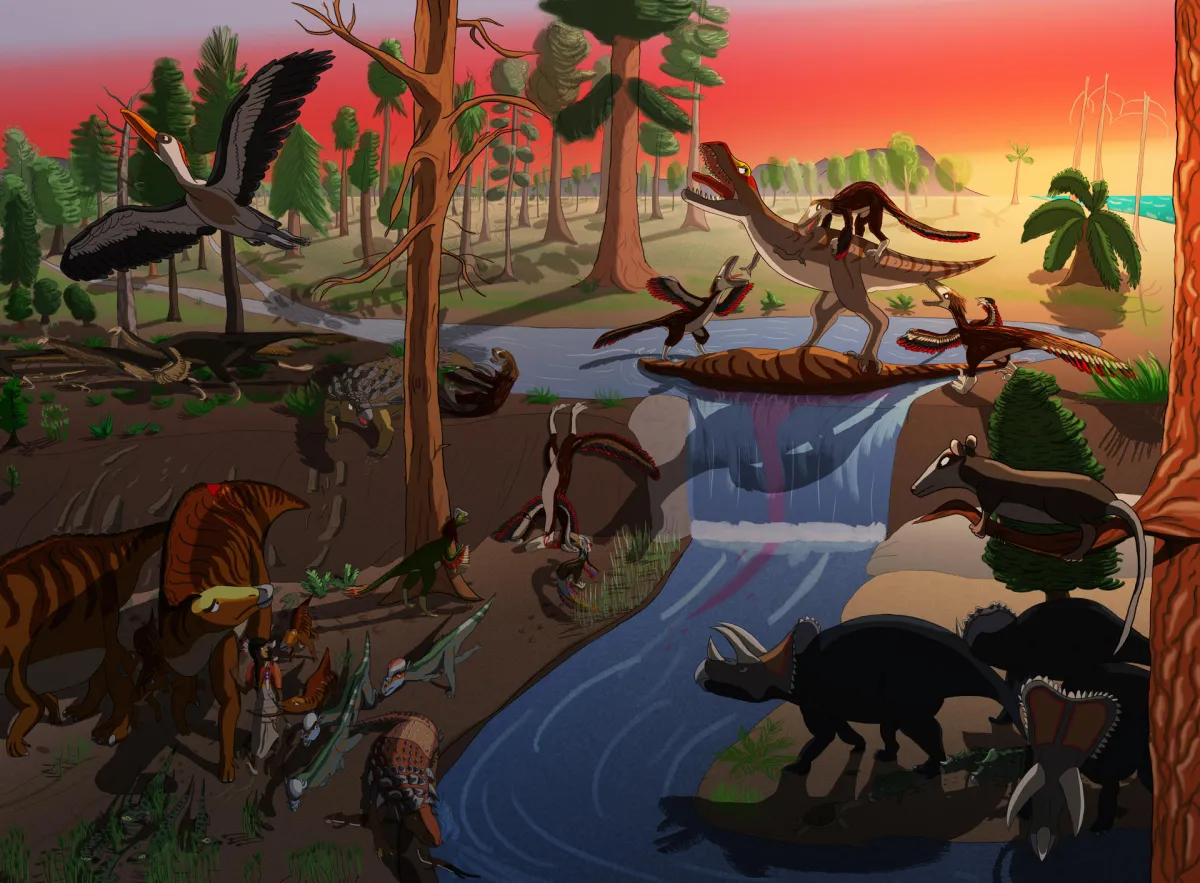 Photo: Hell Creek, via images-wixmp-ed30a86b8c4ca887773594c2.wixmp.com
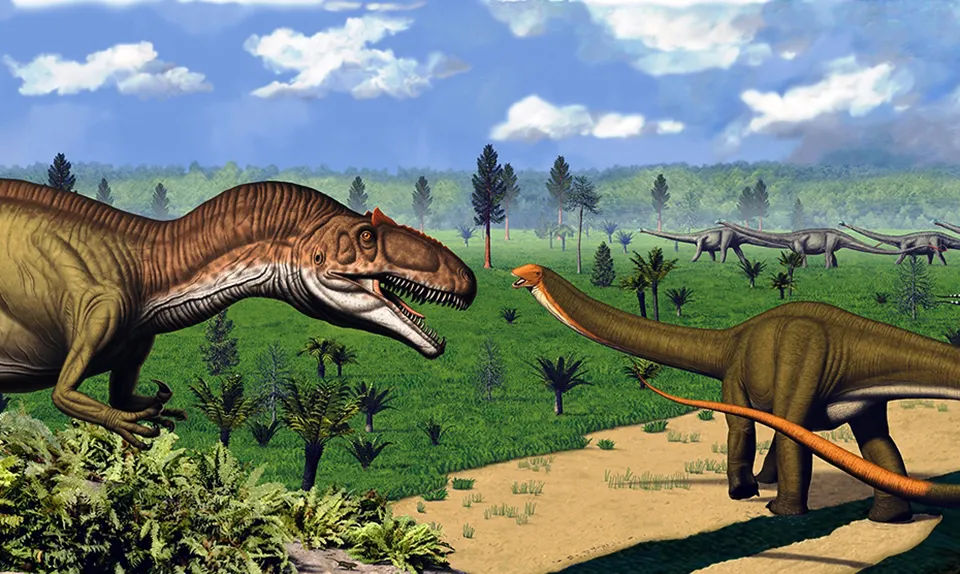 Photo: Morrison Formation, via www.nps.gov
The trouble was that complete dinosaur skeletons are extraordinarily rare. Most fossil discoveries are fragmentary: a femur here, a few vertebrae there, a skull if you're lucky. Assembling a full skeleton from a single specimen was, and remains, the paleontological equivalent of winning the lottery.
Museum preparators in the early 1900s solved this problem the way craftspeople have always solved the problem of missing pieces: they substituted. Bones from related species were cast, shaped, or in some cases used directly when the original fossils were unavailable. The gaps were filled. The skeleton stood up. The public came and stared upward in genuine wonder.
What the public was not told, in most cases, was exactly how many of those bones were doing double duty.
The Display That Became a Landmark
When one of America's premier natural history institutions mounted its celebrated dinosaur hall in the early decades of the twentieth century, the centerpiece was a massive sauropod — the kind of long-necked, long-tailed behemoth that has anchored every child's mental image of the Mesozoic era. The skeleton was enormous, beautifully posed, and presented to the public as a scientifically authoritative reconstruction of the species.
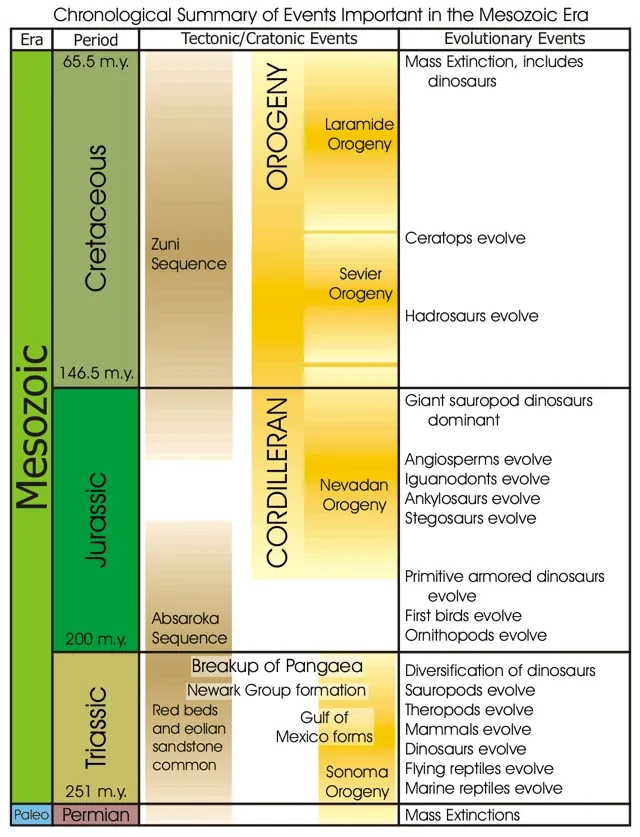 Photo: Mesozoic era, via vignette1.wikia.nocookie.net
Behind the scenes, the preparators who assembled it knew that several key bones — portions of the tail, sections of the forelimbs, and elements of the skull — had been sourced from specimens of related but distinct species. The original fossils for those sections simply hadn't been recovered. Waiting for them would have meant waiting indefinitely, possibly forever. The museum had a hall to open and a reputation to maintain.
So the bones were incorporated, the placard was written without mentioning the substitutions, and the skeleton went on display.
This was not, it should be noted, considered scandalous at the time. It was considered practical. The understanding within the paleontological community was that composite reconstructions were a necessary feature of early museum science, and that specialists who visited the hall would recognize the substitutions immediately. The displays were for the public. The public, curators reasoned, didn't need to know which femur came from which quarry.
Decades of Quiet Knowledge
The gap between what the museum knew and what it told visitors persisted for a remarkably long time. Successive generations of curators were aware of the composite nature of the display. Academic papers published in specialist journals occasionally referenced the substituted elements without making a particular fuss about it. Paleontology students who visited the hall as part of their training were sometimes quietly informed by their professors that the skeleton was not quite the monolithic specimen it appeared to be.
The public, meanwhile, continued to arrive in large numbers, continued to photograph the skeleton, continued to experience the particular awe that only a really large set of very old bones can produce. The display appeared in textbooks. It appeared on postcards. It appeared in the background of countless family photographs taken by people who had no idea they were being awed by a collaborative effort spanning multiple species and multiple fossil beds.
The institution, for its part, didn't actively lie. It simply didn't volunteer information that would have complicated the experience it was trying to create.
The Correction That Came Quietly
When paleontological standards shifted — as they did, gradually, through the latter half of the twentieth century — museums began reassessing their legacy displays with considerably more rigor. New fossil discoveries filled in gaps that had previously required substitution. Imaging technology allowed researchers to study bone structure in ways that made species-level identification far more precise. The composite skeletons of the early museum era began to look less like reasonable compromises and more like problems that needed addressing.
The corrections, when they came, were handled with notable understatement. Updated placards mentioned that certain elements had been "revised based on new research." Press releases emphasized the exciting new discoveries that had made the revisions possible, rather than the decades during which the original display had been less than fully accurate. The language was careful, the framing was forward-looking, and the implicit message was clear: science corrects itself, and isn't that wonderful.
What the corrections did not include, in most cases, was a direct acknowledgment of how long the institutions had known about the inaccuracies before addressing them publicly. That particular timeline was allowed to remain quietly unexamined.
What the Bones Actually Tell Us
It would be easy to frame this as a story about institutional dishonesty, and there's certainly an argument to be made there. Museums presented composite specimens as unified ones, and they did so for decades with full knowledge of the distinction.
But the more interesting reading is about the genuine tension between two legitimate goals: the scientific obligation to accuracy, and the public communication goal of making science accessible and awe-inspiring. A skeleton with asterisks and footnotes and carefully noted gaps where the real fossils haven't been found yet is more honest. It is also, arguably, less effective at making a nine-year-old fall in love with paleontology.
The museums that made these choices weren't cynical. They were caught between what they knew and what they wanted their visitors to feel. And the feeling, for generations of visitors who stood beneath those towering reconstructions with their necks craned back and their mouths open, was real — even if the skeleton wasn't entirely.
Science eventually caught up. It always does. The bones were corrected. The placards were rewritten. And somewhere in a storage facility, the substituted fossils from other species sit in labeled drawers, their brief starring role in the history of public science quietly concluded.