The Town That Accidentally Voted Itself Into Legal Limbo
Democracy is supposed to give people a voice in their government, not make their government disappear entirely. But that's exactly what happened in Warm Springs, Virginia, when a routine municipal election in 1934 triggered a legal loophole so obscure that the town accidentally voted itself out of existence—and nobody noticed for months.
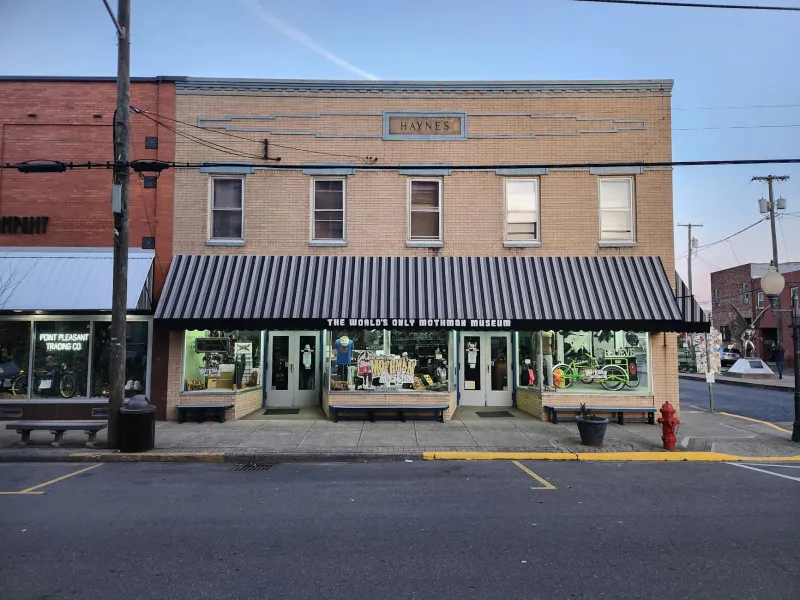
 Photo: Warm Springs, Virginia, via www.drei.at
Just Another Election Day
Warm Springs was the kind of sleepy Virginia town where municipal elections were more social events than political contests. With fewer than 400 residents, everybody knew everybody, and local politics rarely involved more drama than deciding whether to fix the church steps or repave Main Street.
On election day in November 1934, residents dutifully showed up to vote for mayor and town council. The ballot was straightforward, the candidates were familiar faces, and everything proceeded exactly as it had for decades. Votes were counted, winners were declared, and the new officials prepared to take office in January.
What nobody realized was that they had just witnessed the legal death of their own town.
The Devil in the Details
The problem lay buried in Virginia's municipal incorporation statutes—a maze of legal language that even lawyers rarely bothered to read completely. According to an obscure provision dating back to the 1920s, any municipality that failed to elect a full slate of required officials would automatically forfeit its incorporation charter.
Warm Springs had always been casual about its government structure. The town charter called for a mayor, six council members, a treasurer, and a clerk. But like many small towns, Warm Springs often combined positions or left some unfilled when nobody wanted the job.
In 1934, only four people ran for the six council seats. The election proceeded anyway—after all, who was going to stop it? But according to Virginia law, the failure to fill all required positions meant Warm Springs no longer qualified as an incorporated municipality.
With the stroke of a pen (or rather, the absence of enough pen strokes on the ballot), the town had legally ceased to exist.
Life in a Non-Existent Place
For months, absolutely nothing changed in Warm Springs. The newly elected mayor took office and started making decisions. The four council members held meetings and passed ordinances. The town collected taxes, maintained roads, and provided services exactly as it always had.
The postal service continued delivering mail to Warm Springs, Virginia. The telephone company kept the town in their directory. State highway signs still marked the town limits. From every practical perspective, Warm Springs was functioning perfectly normally.
Except it wasn't legally a town anymore.
The Discovery
The truth emerged in the spring of 1935 during what should have been a routine legal matter. A property dispute required checking the town's incorporation status, and a lawyer's clerk dutifully requested the relevant documents from the state.
The response was swift and bewildering: according to Virginia's records, no such municipality as Warm Springs currently existed.
Initial confusion gave way to frantic research as local officials tried to figure out what had happened. When the truth finally emerged, it was almost too absurd to believe. The town had accidentally dissolved itself through the simple act of democratic participation.
The Scramble for Existence
Suddenly, Warm Springs faced questions that no American town should have to confront. Were the taxes they'd been collecting legal? Did their ordinances have any force? Could the mayor actually make binding decisions for a place that didn't officially exist?
Even more practically: what happened to municipal services? The town had been maintaining streetlights, collecting garbage, and providing police protection for months without legal authority to do any of it.
The state government was equally baffled. Virginia had procedures for dissolving municipalities, but they involved lengthy processes and formal notifications. Nobody had ever encountered a town that had accidentally legislated itself out of existence through a technicality.
Democracy's Strangest Resurrection
Reconstituting Warm Springs required legal gymnastics that would have impressed a circus performer. The state had to retroactively recognize the town's continued existence while simultaneously processing a new incorporation application. Meanwhile, Warm Springs had to hold a special election to fill the missing council seats that had caused the problem in the first place.
The solution was a bureaucratic masterpiece of creative interpretation. Virginia officials ruled that Warm Springs had maintained "de facto" municipal status even while lacking "de jure" legal standing. This allowed them to validate the taxes, ordinances, and services provided during the limbo period while requiring proper re-incorporation.
The special election in June 1935 was the most well-attended municipal vote in Warm Springs history. Residents who had never shown interest in local politics suddenly volunteered for positions, determined to ensure their town never again accidentally voted itself out of existence.
When Democracy Gets Too Creative
The Warm Springs incident exposed a fundamental absurdity in how democracy actually works. We assume that voting strengthens civic institutions, but sometimes the very act of holding elections can trigger unintended consequences that undermine the government voters are trying to choose.
The town's experience also highlighted how much of local government operates on informal agreements and community consensus rather than strict legal frameworks. For months, Warm Springs functioned perfectly well as a non-existent entity because everyone simply agreed to pretend it still existed.
The Lesson Nobody Wanted to Learn
After the crisis passed, Virginia quietly amended its municipal laws to prevent future accidental dissolutions. Other states, learning of the incident, reviewed their own statutes for similar loopholes. Nobody wanted to explain to constituents how their town had voted itself out of existence.
Warm Springs itself emerged from the experience with a newfound appreciation for boring bureaucracy. The town began meticulously following every procedural requirement, no matter how trivial it seemed. Better to be tediously legal than accidentally non-existent.
The 1934 election that nearly destroyed Warm Springs serves as a reminder that in democracy, the most dangerous threats often come not from external enemies but from the fine print of our own laws. Sometimes the most patriotic thing you can do is make sure your government actually exists.