The Town That Drew Its Borders Wrong and Ended Up Legally Responsible for the Dead
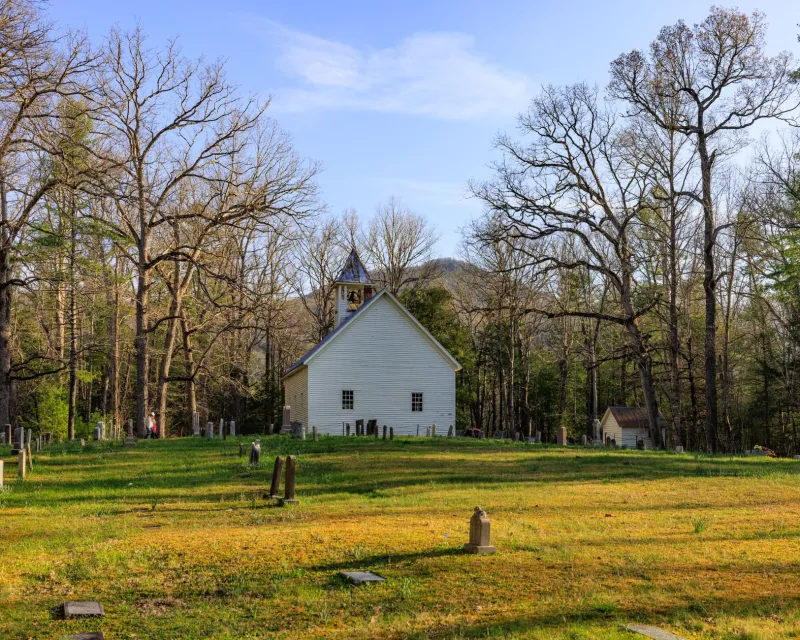
Most towns, when they incorporate, inherit roads, public land, maybe a creek that floods every spring. The residents of one small Midwestern community in the late nineteenth century inherited something considerably more unusual: an entire cemetery, several hundred graves, and a legal obligation to the dead that nobody had planned for and nobody quite knew how to end.
The story starts, as so many American legal disasters do, with a surveyor who was in a hurry.
Drawing the Lines
The 1880s were a boom decade for small-town incorporation across the American Midwest. As railroads pushed west and farming communities grew large enough to need organized services — a fire brigade, a road maintenance budget, some mechanism for collecting property taxes — municipalities were filing incorporation paperwork at a pace that county clerks could barely keep up with.
The process was supposed to be simple. A community would hire a surveyor to establish its legal boundaries, the surveyor would file a plat map with the county, and the new town would officially exist. Straightforward enough, unless the surveyor made an error.
In this case, the error wasn't dramatic. It was a matter of a few hundred feet — a boundary line drawn slightly too far east on the town's southern edge, encompassing a parcel of land that everyone in the community knew was the local burial ground. The cemetery had been operating informally for years before the town itself was incorporated, serving families who'd settled the area in the 1860s and 1870s. It sat just outside what anyone intended to be the town limits.
The surveyor's plat said otherwise.
Nobody Noticed Until It Mattered
For the first several years, the mistake was entirely invisible. The town went about its business. The cemetery went about its business, which is to say it continued accepting new residents of the permanent variety. The families who maintained individual plots kept doing so, and the loose association of community members who occasionally organized cleanup days kept showing up every spring.
The problem surfaced, as these things tend to, when money got involved.
Sometime in the early 1890s, the town attempted to levy a general property assessment — a standard municipal action to fund road improvements. A county assessor working through the plat map noticed that the cemetery parcel fell within the incorporated limits and flagged it for assessment. This created an immediate question: who owned the cemetery?
The answer was not obvious. The land had never been formally deeded to any individual or organization. Families owned their individual plots by custom and long-standing agreement, but the underlying land had no clear title. Under the terms of the incorporation, the municipality appeared to have absorbed it.
The town, in other words, owned a cemetery. And with ownership came responsibility.
The Legal Tangle
What followed was the kind of small-town legal saga that never makes the national papers but absolutely dominates local conversation for a generation.
Families with plots were understandably nervous. Did municipal ownership mean the town could eventually redevelop the land? Could the graves be moved? Who was responsible for maintaining the grounds, now that the town technically held the property? And what happened to the informal agreements that had governed the cemetery for decades — were those still valid, or had incorporation wiped them out?
The town council, for its part, mostly wanted the problem to go away. Several attempts were made to formally deed the cemetery to a private association or a church, which would have neatly resolved the ownership question. These efforts kept running into the same obstacle: the families with existing plots were reluctant to sign over any rights until they were certain their own graves were protected, and no private association wanted to take on the liability without a clear legal framework governing what they were accepting.
So the town remained, technically and awkwardly, in the cemetery business.
Rules for the Unprecedented
Over the following decades, the municipality developed a small body of informal regulations governing its accidental holding. The town would maintain the perimeter fence and the main access path. Individual families remained responsible for their own plots. No new interments could be approved without a vote of the town council — a requirement that led to at least one memorable council meeting in the early 1900s at which the agenda included road gravel procurement, a dispute over a neighbor's fence, and the approval of a burial.
The tax question was resolved, eventually, by simply exempting the cemetery parcel from assessment, which is how most cemeteries are treated under state law anyway. But the ownership question lingered in the background for decades, occasionally resurfacing when someone new was elected to the council and discovered, with some alarm, exactly what the town's property records contained.
The Resolution That Wasn't Quite One
The matter was finally addressed — though not entirely resolved — sometime in the mid-twentieth century, when the state updated its municipal property laws and created a cleaner mechanism for transferring cemetery land to nonprofit associations. The town used the new framework to formally convey the property to a community preservation group, which took on maintenance responsibilities and established a proper deed structure for existing plot holders.
The boundary error that started the whole thing was officially corrected on the county plat at the same time, quietly redrawing the town's southern edge to where everyone had always assumed it was.
It took about seventy years to fix a surveyor's mistake that took about thirty seconds to make.
Somewhere in the county records, there is still a stretch of time during which a small American town was, by law, the landlord of several hundred graves. The residents who occupied those plots never complained about the arrangement. That, at least, was one problem the town council never had to deal with.