The Accidental Tourist Who Built a Beach Town: How a Wrong Turn Changed Florida Forever
Photo: Mark Crombie, Public domain, via Wikimedia Commons
There's a version of history where Horace Hovey fixes teeth in Chicago for the rest of his life, retires comfortably, and nobody outside his dental practice ever thinks about him again. That version didn't happen. Instead, a wrong turn, a missing boat, and a single afternoon on a forgotten Florida beach set off a chain of events that would reshape an entire region's identity — and Hovey himself never quite saw it coming.
 Photo: Horace Hovey, via eblong.com
A Dentist With No Business Being in Florida
In the spring of 1901, Hovey was traveling through the South on what amounted to a working vacation, accompanying a group of colleagues on a fishing trip along the Gulf Coast. The plan was straightforward enough: follow the coast, catch fish, return to Chicago. But somewhere in the confusion of unfamiliar roads and unreliable maps, the group lost contact with the boat they'd hired to meet them further down the shoreline.
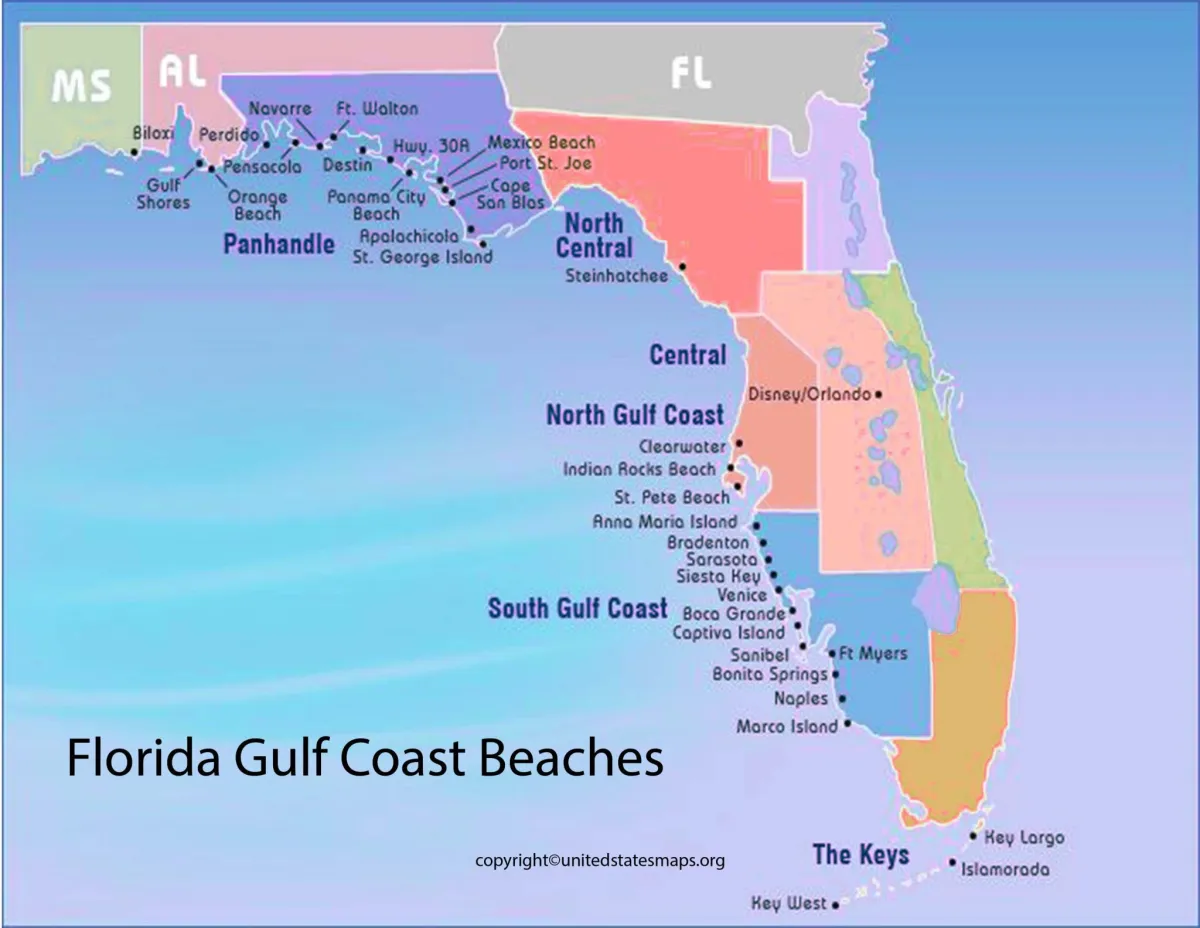 Photo: Gulf Coast, via unitedstatesmaps.org
In the process of trying to locate it, Hovey found himself alone on a stretch of white-sand beach he couldn't identify on any map he was carrying. The Gulf water, he later wrote in a letter to his brother, was "a color I had no name for — somewhere between green and blue and something altogether different."
He spent one night camped near the shore, located the boat the following morning, and rejoined his group. Most people would have filed the experience away as a pleasant footnote to an otherwise unremarkable trip. Hovey, apparently, was not most people.
The Quiet Land Grab Nobody Noticed
Within two years of that unplanned overnight stay, Hovey had made discreet inquiries about land ownership along the section of coastline he'd stumbled upon. What he discovered was a buyer's dream: large parcels of beachfront land with no road access, no development, and owners who had essentially given up on the idea that anyone would ever want it.
Florida in the early 1900s was not yet the vacation destination it would become. The interior was swampy, mosquito-heavy, and logistically brutal. The Gulf Coast, outside of a few established ports, was largely ignored by northern investors who were focused on the Atlantic side of the state. Hovey, who had no background in real estate and no particular business strategy beyond "this place was remarkable," began buying small parcels whenever he could afford to.
He didn't advertise his interest. He didn't form a company. He simply paid cash, filed deeds, and returned to drilling teeth in Chicago during the months he wasn't traveling south.
What Happens When a Dentist Plays the Long Game
By 1910, Hovey owned a patchwork of coastal land that, taken together, represented a significant portion of what would eventually become one of Florida's most recognizable resort communities. He hadn't developed any of it. There were no hotels, no roads, no infrastructure of any kind. What he had was acreage, patience, and the stubborn conviction that the place he'd found by accident was worth something.
The transformation began when Hovey, now in his late fifties, started selling parcels to developers who had begun sniffing around the Gulf Coast as Florida's national profile rose. The railroad had changed everything — suddenly the interior wasn't impassable, and wealthy northerners were discovering that the state's winters were, to put it mildly, preferable to Chicago's.
Hovey didn't get rich overnight. He sold slowly and selectively, reportedly turning down several offers he felt came from buyers who would overdevelop the land too quickly. Whether that was principled restraint or simply shrewd negotiation is hard to say from this distance. Either way, the result was a stretch of coastline that developed more gradually than many of its Florida neighbors — and retained more of the character that had stopped Hovey in his tracks decades earlier.
The Remarkable Gap Between Intention and Outcome
What makes Hovey's story genuinely strange isn't the success itself — plenty of early Florida land speculators made money. What's strange is the complete absence of intention at every key moment.
He didn't go to Florida to invest. He went to fish. He didn't explore the coastline on purpose. He was looking for a boat. He didn't launch a real estate strategy. He bought land the way some people buy lottery tickets — not with a plan, but with a feeling.
And yet the outcome was as consequential as if he'd spent years researching the market, studying demographics, and consulting with experts. The beach town that grew from the land he assembled draws visitors by the millions today. Its economy runs on tourism that traces, in a direct if winding line, back to one dentist sleeping on a beach he couldn't find on a map.
History's Favorite Kind of Story
Historians love to trace the grand intentions behind great outcomes — the visionary who saw what others missed, the strategist who played the long game from the start. Hovey's story is a useful corrective to that narrative. Sometimes the person who shapes a place's future is just someone who got lost at the right moment and had the good sense to pay attention to what they found.
The coastline didn't care why he showed up. It just needed someone to notice it.
Hovey noticed. The rest, as they say — though rarely with this level of dental involvement — is history.