Printed in Desperation: The Great Depression Towns That Made Their Own Money and Almost Got Away With It
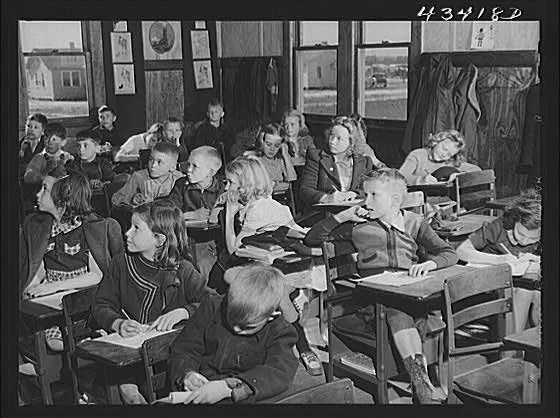
Photo: Farm Security Administration, Public domain, via Wikimedia Commons
Picture a dollar bill that could only be spent at the hardware store on Elm Street, issued by a city government that had no legal authority to issue currency, stamped with a serial number that meant absolutely nothing, and accepted by your neighbors with a shrug and a nod because what other choice did anyone have. Now picture that system actually working — keeping groceries on shelves, wages in workers' pockets, and small businesses alive — while the official economy collapsed around it.
That wasn't fiction. That was Tuesday in several American towns during the early 1930s.
When the Money Simply Stopped
The banking crisis of the Great Depression didn't just shrink the economy. In many communities, it effectively ended the concept of cash altogether. Between 1930 and 1933, more than 9,000 American banks failed. Savings accounts vanished overnight. Businesses that had operated on credit found their lines of credit had evaporated along with the institutions that extended them.
In small towns especially, the effect was almost medieval. People had goods and services and labor to exchange — they just had no medium to exchange them with. Barter worked for some transactions, but it broke down fast when the person with eggs didn't need firewood and the person with firewood didn't need eggs.
Somewhere in the gap between desperation and ingenuity, a few municipal governments arrived at the same unlikely solution: if the federal government wouldn't supply money, they'd manufacture their own.
Tenino, Washington, and the Wooden Dollar
Of all the Depression-era scrip experiments, the one that became most famous — and most photographed — happened in Tenino, Washington, a small town about twenty miles south of Olympia. When the local bank collapsed in December 1931, taking most of the town's liquid assets with it, the Chamber of Commerce did something that sounds like a punchline: they started printing money on thin sheets of Sitka spruce wood.
 Photo: Tenino, Washington, via 1gr.cz
 Photo: Sitka spruce, via images.eurooptic.com
The wooden scrip was issued in denominations of 25 cents, 50 cents, and one dollar. It was stamped with official-looking seals and serial numbers. It was redeemable, in theory, for real currency once the town's frozen bank assets were eventually recovered. And it circulated. Merchants accepted it. Workers received wages in it. The local economy, battered and diminished, kept moving.
The novelty of wooden currency attracted national press coverage almost immediately. Photographs of Tenino residents paying for groceries with small wooden rectangles ran in newspapers across the country. The town leaned into the attention, and the scrip itself became a minor tourist curiosity — some of it was apparently purchased by collectors who never intended to spend it at all, which was, in its own strange way, exactly how currency is supposed to work.
The Legal Gray Zone Nobody Wanted to Test
Here's where the story gets genuinely interesting from a legal standpoint. Federal law prohibits the counterfeiting of U.S. currency and, more broadly, the issuance of private money intended to circulate as a substitute for federal currency. On its face, what Tenino and dozens of other towns were doing should have triggered federal intervention almost immediately.
It didn't. And the reason it didn't reveals something fascinating about the difference between what laws say and how they're enforced during a crisis.
The scrip these towns issued was technically classified as "emergency currency" or "trade scrip" — a category that existed in a genuinely ambiguous corner of American monetary law. It wasn't pretending to be federal currency. It was openly, explicitly local. It bore the names of the issuing municipalities. It was denominated in ways that made clear it was redeemable only within a specific community under specific conditions.
Federal authorities, already overwhelmed by a banking crisis of historic proportions, made a quiet collective decision that prosecuting desperate small towns for printing wooden dollars was not the most pressing item on the agenda. The Roosevelt administration, which took office in 1933 and began pushing the New Deal into existence, was broadly sympathetic to local improvisation as long as it didn't directly undermine national monetary policy.
So the scrip circulated. And the government looked away.
How It Ended
The story of Depression-era scrip doesn't end with a dramatic crackdown or a landmark court case. It ends, somewhat anticlimactically, with recovery.
As the New Deal pumped federal money into local economies through public works projects and relief programs, the cash starvation that had made scrip necessary gradually eased. Banks reopened. Federal currency began flowing again. And the local money that had kept towns alive through the worst years simply became unnecessary.
For most scrip holders, the transition was painless. Towns that had promised redemption in federal currency when assets were recovered generally made good on that promise, at least partially. Some scrip was redeemed at face value. Some was redeemed at a discount. Some — particularly the Tenino wooden dollars that had become collector's items — was never redeemed at all, which meant the towns that issued it effectively got something for nothing.
A few holders were left with scrip that was simply declared worthless when the issuing authority dissolved or reorganized. Those stories are less charming and more instructive.
What Money Actually Is
The Depression scrip experiment is a useful reminder that money is, at its core, a collective agreement rather than an intrinsic fact. Federal currency works because enough people agree it works — and when that agreement breaks down, as it did in 1931, human beings will construct a replacement agreement out of whatever materials are available, including spruce wood.
The towns that printed their own currency weren't committing fraud. They were doing something more philosophically interesting: they were reminding their residents that the economy is ultimately a social contract, and that when the official version of that contract fails, communities can write their own.
It worked. For a while. And then the real money came back, and the wooden dollars became souvenirs.
Which is, when you think about it, exactly what all money eventually becomes.