Neither Rain Nor Sleet Nor Two Years Stranded: The Mail Carrier Who Refused to Give Up
When Duty Calls From a Desert Island
The United States Postal Service motto about neither snow nor rain nor heat nor gloom of night staying couriers from their appointed rounds never mentioned shipwrecks, but apparently nobody told Thomas Mitchell. In 1891, this dedicated postal clerk turned a two-year survival ordeal into the most delayed mail delivery in American history – and somehow convinced his superiors that it still counted as legitimate postal service.
 Photo: Thomas Mitchell, via m.media-amazon.com
Mitchell's adventure began aboard the steamship Pacific Star, carrying mail from San Francisco to various Pacific territories. What should have been a routine three-week journey turned into a Robinson Crusoe nightmare when the ship struck an uncharted reef during a storm, breaking apart so quickly that most of the crew barely had time to launch the lifeboats.
The Postal Worker's Priorities
As the Pacific Star went down, most survivors grabbed food, water, or personal belongings. Thomas Mitchell grabbed the mail sack. Not because he was particularly heroic or forward-thinking, but because, as he later explained, "It was my job to protect the mail, and a sinking ship didn't seem like proper grounds for abandoning my duties."
That mail sack contained 247 pieces of correspondence: personal letters, business documents, and even a few packages wrapped in oilcloth. When Mitchell's lifeboat washed ashore on what turned out to be an uninhabited island roughly 400 miles west of the California coast, he was the sole survivor from his boat, clutching a bag of soggy mail like a life preserver.
Two Years of Postal Dedication
What followed was a masterclass in both survival skills and bureaucratic stubbornness. Mitchell fashioned shelter from driftwood and palm fronds, learned to catch fish with improvised spears, and became expert at opening coconuts. But every single day, without exception, he carefully tended to his mail.
Using techniques that would make modern conservators proud, Mitchell dried each piece of correspondence in the shade, weighted them flat under rocks, and even attempted to repair tears using plant fibers. He constructed a waterproof storage system from salvaged wood and palm leaves, organized the mail by destination, and kept meticulous records of each piece's condition.
The letters themselves became his connection to civilization. He memorized return addresses, studied postmarks, and even began to imagine the lives of the senders and recipients. Mrs. Eleanor Whitman of Sacramento had written to her sister in Oregon Territory about a new baby. The Consolidated Mining Company of Denver was sending contracts to partners in Hawaii. A young man named Robert Chen in San Francisco's Chinatown had penned what appeared to be a love letter to someone in the Philippines.
Rescue and the Bureaucratic Miracle
In March 1893, nearly two years after the wreck, a passing merchant vessel spotted Mitchell's signal fire and rescued him from the island. He was sunburned, twenty pounds lighter, and sporting a beard that would make a mountain man jealous, but the first words out of his mouth weren't about food or water. They were: "I have mail to deliver."
The rescue ship's captain, thinking Mitchell was delirious from his ordeal, humored him by accepting the carefully preserved mail sack. But when they reached San Francisco, Mitchell immediately reported to the central post office and formally requested permission to complete his delivery route.
This is where the story becomes truly unbelievable. Instead of gently suggesting that Mitchell take some time off to recover, Postmaster General John Wanamaker's office actually considered the request. A team of postal inspectors examined the mail, confirmed that it was still in deliverable condition (mostly), and after three weeks of deliberation, issued an official ruling: Thomas Mitchell would be permitted to complete his original mail route, with the understanding that recipients would be informed of the unusual delay.
The Most Anticipated Mail Delivery in History
Word of Mitchell's planned delivery spread through San Francisco's newspapers like wildfire. The San Francisco Chronicle ran daily updates tracking his progress. The Sacramento Bee sent a reporter to follow him on horseback. By the time Mitchell reached his first delivery in Oakland, crowds had gathered to watch history in the making.
The reactions of recipients varied wildly. Mrs. Eleanor Whitman burst into tears when she received her sister's letter about the baby – who was now a walking, talking toddler. The Consolidated Mining Company executives were initially confused, then fascinated when they realized they were holding a piece of maritime history. Some recipients treated the delayed letters like historical artifacts, framing them instead of reading them.
The most touching response came from Robert Chen's intended recipient in Manila, who had since moved to San Francisco. When Mitchell tracked her down, she explained that Robert had died in an accident just months after sending the letter. The delayed delivery allowed her to read his final words to her – a love letter that had literally traveled to the ends of the earth to reach her.
The Postal Service's Strangest Success Story
Mitchell completed his delivery route over the course of six weeks, personally handing over every single piece of salvageable mail. The Postal Service officially recorded the deliveries as completed, making them the most delayed successful mail delivery in American history. Mitchell received a commendation for "extraordinary dedication to postal service duties under unusual circumstances."
More remarkably, the Postal Service retroactively paid Mitchell his full salary for the two years he spent on the island, ruling that he had been "temporarily detained while in performance of official duties." They even reimbursed him for the coconuts he had eaten, classifying them as "emergency postal service rations."
A Legacy Written in Stamps
Thomas Mitchell returned to postal work, though he requested assignment to routes that didn't involve ocean travel. He became something of a celebrity within postal circles, speaking at training seminars about dedication to duty and proper mail handling procedures. His survival techniques were actually incorporated into postal service emergency protocols for workers in remote territories.
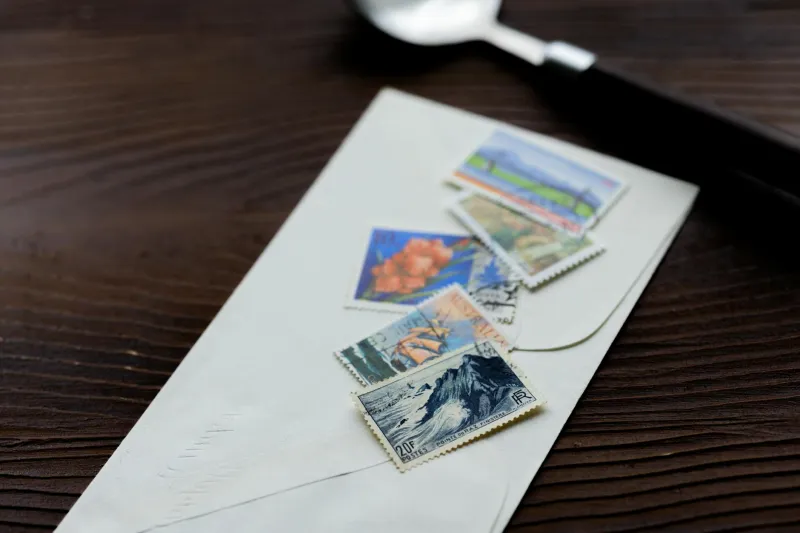
In 1941, fifty years after the shipwreck, the U.S. Postal Service issued a commemorative stamp featuring Mitchell's story as part of a series honoring postal workers. The stamp showed a bearded figure on a beach, holding up a letter against a sunset backdrop.
The island where Mitchell spent two years was eventually identified and mapped by the Coast Guard. It's now officially known as Mitchell Island, and it serves as a navigation landmark for ships crossing the Pacific. A small plaque installed by the Postal Service Employees Union reads: "In memory of Thomas Mitchell, who proved that the mail always goes through, even when it takes the scenic route."
 Photo: Mitchell Island, via i.pinimg.com
Today, Mitchell's story is still told at postal service training academies as an example of dedication to duty, though modern instructors are careful to note that postal workers are no longer expected to maintain mail delivery schedules while stranded on desert islands. The official policy now states that survival takes priority over postal duties, which seems like a reasonable update to the regulations.
But somewhere in the archives of postal service lore, Thomas Mitchell's delivery record stands as proof that sometimes the most impossible dedication produces the most unforgettable results.