From Confederate Commander to Civil Rights Crusader: The General Who Switched Sides After the War Ended
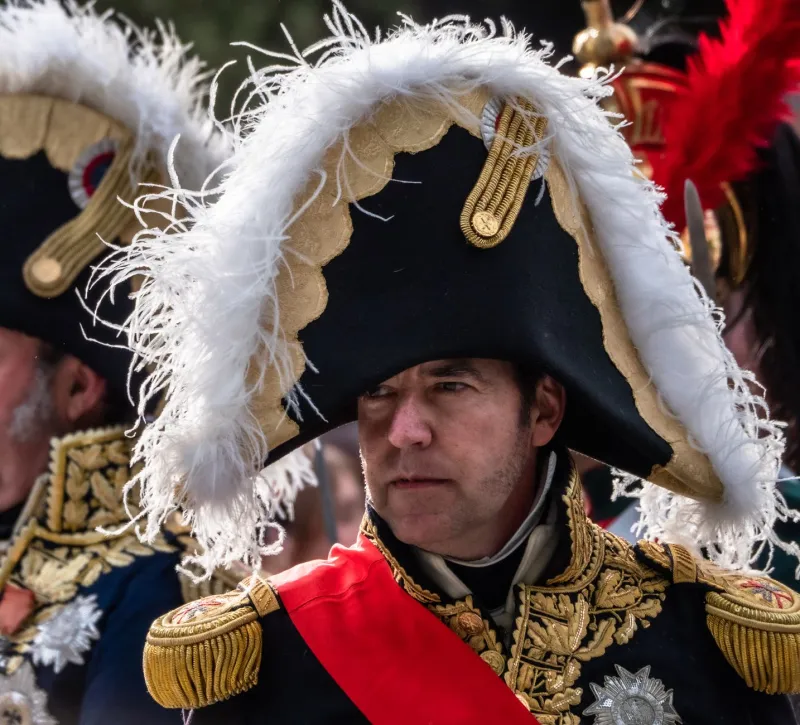
If you pitched this story to a Hollywood studio, they'd laugh you out of the room. A Confederate general—one of Robert E. Lee's most trusted commanders—becomes a Republican politician and ends up in actual street fights defending Black Americans' voting rights. It sounds like alternate history fiction, but James Longstreet's post-war transformation is one of the most jaw-dropping political reversals in American history.
 Photo: Robert E. Lee, via cdn.colorearw.net
 Photo: James Longstreet, via i.pinimg.com
The General Who Knew How to Win
James Longstreet wasn't just any Confederate officer. Known as Lee's "Old War Horse," he commanded the First Corps of the Army of Northern Virginia and played crucial roles in nearly every major Confederate victory. At Gettysburg, he famously argued against Pickett's Charge, proving his tactical brilliance extended beyond blind loyalty. When Lee surrendered at Appomattox in April 1865, Longstreet stood beside him as one of the Confederacy's most respected military minds.
Then something extraordinary happened. Instead of retreating into bitter defeat like most of his fellow officers, Longstreet did the unthinkable: he looked around at the post-war South and decided the Confederacy had been wrong.
The Conversion Nobody Saw Coming
By 1867, barely two years after Appomattox, Longstreet had joined the Republican Party—the party of Abraham Lincoln and Reconstruction. His reasoning was brutally practical: the war was over, the South had lost, and continued resistance would only bring more suffering. But his transformation went far deeper than political pragmatism.
Longstreet publicly endorsed Black suffrage and supported Reconstruction policies that most white Southerners viewed as treason. He didn't just switch parties; he switched sides entirely. When President Ulysses S. Grant—his old West Point friend and former battlefield opponent—offered him a federal position, Longstreet accepted without hesitation.
When Politics Became Warfare
In 1872, Longstreet's new allegiances were put to the ultimate test. As head of the New Orleans Metropolitan Police and commander of the Louisiana state militia, he found himself facing down the White League—a paramilitary organization determined to overthrow the Republican state government and end Black political participation.
 Photo: New Orleans, via upload.wikimedia.org
The confrontation came to a head on September 14, 1874, in what became known as the Battle of Liberty Place. Armed White League militiamen, many of them Confederate veterans, marched on the statehouse. Standing in their way was James Longstreet, the Confederate general they had once cheered, now commanding a racially integrated police force.
The irony was staggering: the same man who had led Confederate charges against Union forces was now leading Black and white policemen against white supremacists waving Confederate flags.
The Fight in the Streets
The battle was brief but intense. Longstreet's outnumbered forces fought building-to-building through downtown New Orleans before being overwhelmed. The general himself was wounded and temporarily captured by his former Confederate comrades, who treated their old commander as the worst kind of traitor.
For three days, the White League controlled New Orleans until federal troops arrived to restore the legitimate government. Longstreet had literally bled defending the rights he had once fought to deny.
The Price of Principle
Longstreet's transformation cost him everything the Old South valued. Former friends shunned him, fellow Confederate veterans branded him a traitor, and Southern newspapers vilified him for decades. When other Confederate generals were being lionized as heroes, Longstreet was written out of the Lost Cause mythology entirely.
Even his role at Gettysburg was rewritten to make him the scapegoat for Confederate defeat. The same tactical brilliance that had made him Lee's most trusted general was now portrayed as stubborn insubordination that cost the South its best chance at victory.
A Reality Check on Human Nature
Longstreet's story demolishes our comfortable assumptions about how people change—or don't change. We expect Confederate generals to remain unreconstructed rebels, nursing grievances and fighting the last war. We don't expect them to experience genuine moral evolution, to admit they were wrong, and to risk their lives defending their former enemies' rights.
Yet that's exactly what happened. The man who spent four years trying to preserve slavery spent the next decade fighting for Black civil rights. The general who led charges against the United States Army became a federal law enforcement officer. The Confederate hero became a Republican politician.
The Uncomfortable Truth
Perhaps the most unsettling aspect of Longstreet's transformation is what it suggests about the other Confederate leaders who chose differently. If one of Lee's most trusted generals could recognize the moral bankruptcy of white supremacy and act on that recognition, what does that say about those who didn't?
Longstreet's story is a reminder that history's villains aren't cartoon characters locked into evil roles. They're human beings capable of growth, change, and redemption—which makes their choices all the more meaningful. Sometimes the most shocking thing about the past isn't how different people were, but how much like us they really were.
In a career spanning two wars—one against the Union, one against white supremacy—James Longstreet proved that it's never too late to choose the right side of history, even when that choice costs you everything you once held dear.