The Ghost Party That Won Real Power: Democracy's Most Impossible Election
The Party That Wouldn't Die
Democracy is supposed to be straightforward: candidates run, people vote, winners govern. But in Riverside, Ohio, in 1947, a simple typo turned election day into a constitutional nightmare that lasted eight months and required the state legislature to rewrite local election law.
It all started with the Progressive Reform Party—a political organization that had officially dissolved in 1943 after its founder, local businessman Harold Zimmerman, moved to California. The party had been moderately successful in local elections during the late 1930s, focusing on municipal improvements and government efficiency.
 Photo: Harold Zimmerman, via c8.alamy.com
By 1947, nobody remembered much about the Progressive Reform Party except that it used to exist. Which made it particularly strange when they appeared to be running a candidate for city council.
The Typo That Changed Everything
The Riverside Board of Elections had a new secretary in 1947: Margaret Walsh, a well-meaning but overwhelmed recent high school graduate who had taken the job because it seemed like easy work. Her primary responsibility was preparing the official ballot for the November municipal election.
 Photo: Margaret Walsh, via margaretwalshbest.com
Margaret was working from the previous election's template, carefully updating candidate names and party affiliations. When she reached the section for the Progressive Reform Party, she found a note indicating "DISSOLVED - DO NOT INCLUDE."
She deleted the note but forgot to delete the party listing itself.
Worse, the ballot template had a placeholder candidate name: "[CANDIDATE TBD]". Margaret, assuming this was some kind of official designation she didn't understand, left it exactly as written.
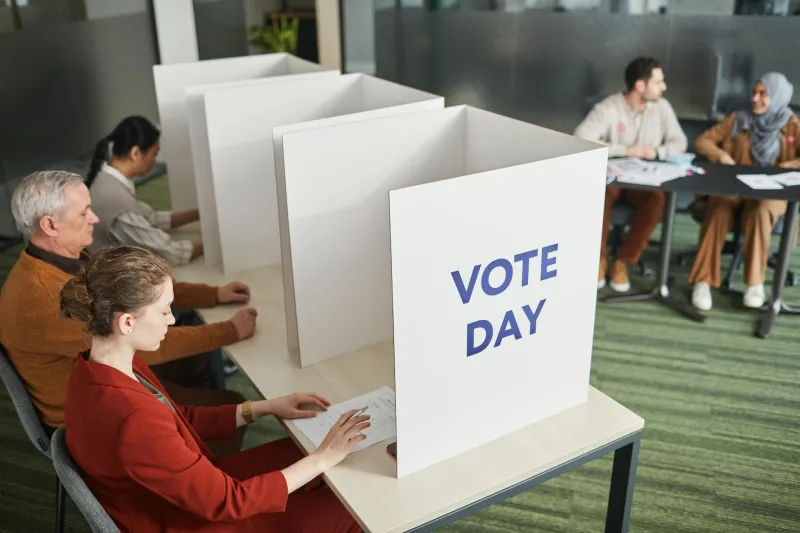
So when Riverside voters opened their ballots on November 4, 1947, they found something remarkable: the Progressive Reform Party was apparently running someone named "Candidate T.B.D." for city council.
The Confusion Campaign
Voters had no idea what to make of the mysterious candidate. Some assumed T.B.D. was a foreign name—perhaps Polish or Czech, common ethnicities in the area. Others thought it might be initials, like "Theodore Bradford Davidson" or "Thomas Benjamin Doyle."
The local newspaper, the Riverside Herald, tried to investigate but couldn't find anyone associated with the Progressive Reform Party or any candidate named T.B.D. They ran a front-page story three days before the election titled "Mystery Candidate Stumps Local Officials."
This only made things worse. The article's speculation that T.B.D. might be a "reform-minded outsider running a stealth campaign" actually generated interest among voters frustrated with the existing city council.
Election Day Chaos
On election day, something unprecedented happened: 847 people voted for Candidate T.B.D.—enough to win the fourth and final city council seat.
Poll workers were baffled. Election officials were panicked. And Margaret Walsh, who had realized her mistake weeks earlier but was too embarrassed to report it, finally confessed to her supervisor at 11:30 PM as the votes were being tallied.
"I thought maybe nobody would vote for them," she later told investigators. "I mean, who votes for someone named Candidate T.B.D.?"
Apparently, 847 people in Riverside, Ohio.
The Constitutional Crisis
Riverside's city attorney, Robert Hendricks, had never faced anything like this. The election results were clear: T.B.D. had won. But T.B.D. didn't exist. Neither did the Progressive Reform Party, technically.
Hendricks spent three sleepless days researching Ohio election law, municipal charters, and constitutional precedent. His conclusion was both simple and terrifying: there was no legal mechanism for handling this situation.
The city council couldn't seat a non-existent person, but they also couldn't ignore a legitimate election result. Declaring the election invalid would disenfranchise 847 voters. Leaving the seat empty would violate the city charter, which required four council members for a quorum.
The Search for T.B.D.
In desperation, city officials launched a public campaign to find anyone—literally anyone—who might be willing to serve as the elected representative of the non-existent Progressive Reform Party.
They placed ads in newspapers across Ohio: "Wanted: T.B.D. or reasonable facsimile. Municipal experience preferred but not required. Must be willing to represent the interests of 847 Riverside voters. Salary: $50/month plus parking."
The response was overwhelming and completely unhelpful. They received applications from:
- A circus performer named "The Magnificent T.B.D."
- Seventeen different people claiming their initials were actually T.B.D.
- A man who legally changed his name to "Candidate T.B.D. Smith"
- Harold Zimmerman's nephew from California, offering to move back to Ohio to "resurrect the family political legacy"
The Legislative Solution
After six months of legal limbo, the Ohio State Legislature finally intervened. They passed Emergency Resolution 47-B, known locally as the "Riverside Rule," which established procedures for handling elections involving non-existent candidates or dissolved parties.
The resolution required a special election, but only after a 60-day waiting period to allow any legitimate candidate to come forward and claim the T.B.D. identity.
Nobody did.
The Do-Over Election
The special election held in June 1948 was anticlimactic. Three actual candidates ran for the seat, and Martha Peterson, a retired schoolteacher, won with 312 votes.
But here's the twist: 127 people wrote in "Candidate T.B.D." again, apparently either out of nostalgia or sheer stubbornness.
Margaret Walsh, meanwhile, had been quietly reassigned to the Parks and Recreation Department, where her duties involved maintaining flower beds and organizing softball leagues—tasks with significantly lower constitutional implications.
The Legacy of T.B.D.
The Riverside Rule became a model for election law across the United States. Dozens of states adopted similar provisions after experiencing their own ballot printing disasters in subsequent years.
More importantly, the incident revealed something fascinating about voter behavior: given the choice between known quantities they disliked and complete unknowns, nearly a thousand people chose the mystery.
"People weren't voting for T.B.D.," reflected former city council president William Hayes in a 1987 interview. "They were voting against everything T.B.D. wasn't. Sometimes that's the most honest vote you can cast."
Today, Riverside's city hall displays a small plaque commemorating the "T.B.D. Election." It reads: "In memory of Candidate T.B.D., who proved that in democracy, even fictional representatives can represent real frustrations."
Every November, a few Riverside voters still write in "T.B.D." on their ballots, keeping alive the memory of the candidate who won an election by never existing in the first place.