The Death Certificate That Ruined Everything
Sergeant Thomas C. Dooley was having a perfectly normal day in the trenches of France when the U.S. Army decided he was dead. It was 1918, and Dooley was busy doing what soldiers do – following orders, dodging bullets, and writing letters home to his family in Chicago. What he didn't know was that somewhere in the vast bureaucratic machinery of the American Expeditionary Forces, a clerk had just signed his death warrant with a stroke of a pen.
The mistake was simple enough: wrong serial number, similar name, and the kind of rushed paperwork that defines military operations during wartime. But the consequences would turn Dooley's life into a Kafkaesque nightmare that made surviving World War I look like the easy part.
When Chicago Mourned a Living Man
Back in Chicago, the Dooley family received the telegram that every military family dreaded: "We regret to inform you..." The notification was official, complete with military letterhead and the solemn language reserved for heroes who had made the ultimate sacrifice.
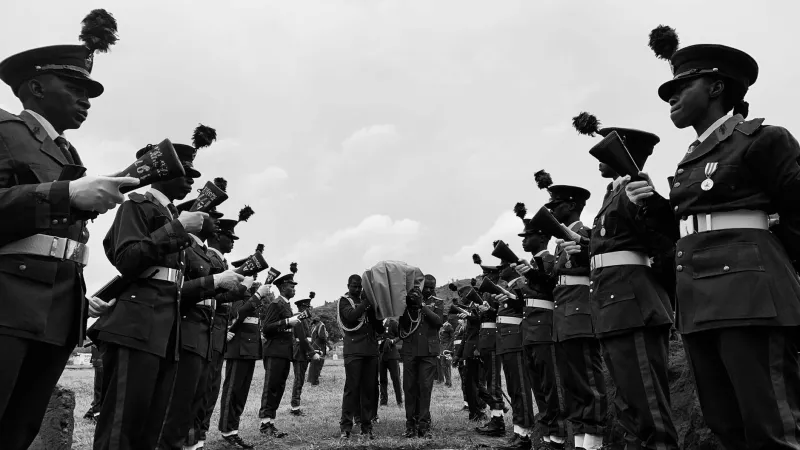
Dooley's mother collapsed. His father contacted the local newspaper. His girlfriend began planning a life without him. The neighborhood rallied around the grieving family, and within a week, the U.S. Army had organized a full military funeral, complete with honor guard, flag-draped coffin, and a bugler playing taps.
Hundreds of people attended Sergeant Dooley's funeral. The local priest delivered a moving eulogy about sacrifice and service. Veterans from previous wars served as pallbearers for the empty coffin. The whole ceremony was, by all accounts, beautiful and dignified – everything a fallen soldier deserved.
Meanwhile, in France, the very much alive Thomas Dooley was wondering why his letters home had stopped getting responses.
The Resurrection Problem
When the war ended and Dooley prepared to return home, he discovered that being legally dead presented some unique challenges. The Army had processed his death benefits, closed his service record, and officially removed him from the rolls of the living. His family had collected his final pay. The government had issued a death certificate.
From the military's perspective, Thomas Dooley was a paperwork problem that couldn't possibly exist. Dead soldiers don't file complaints, request back pay, or show up at demobilization centers asking for transport home. The clerks processing his return had no forms for resurrection – their bureaucracy simply wasn't designed to handle the undead.
Dooley found himself in the bizarre position of having to prove he was alive to an organization that had already buried him. He needed witnesses, medical examinations, and sworn statements confirming his continued existence. The Army treated his resurrection with the same suspicious efficiency they'd applied to his death.
The Homecoming That Nobody Expected
When Dooley finally made it back to Chicago, his family's reaction was somewhere between joy and terror. His mother fainted – again. His father accused him of being an impostor. His girlfriend, who had been courted by half the neighborhood during her mourning period, suddenly found herself in an extremely awkward social situation.
The local newspaper, which had published a glowing obituary, now faced the embarrassing task of explaining how they'd gotten the story of his death so wrong. The priest who had delivered the eulogy questioned whether he was witnessing a miracle or a mistake. The veterans who had carried his empty coffin weren't sure whether to welcome him home or ask for their time back.
But the real problems were just beginning. Legally speaking, Thomas Dooley didn't exist. His death certificate was still valid, his military record was closed, and his identity had been officially terminated. He couldn't get a job, open a bank account, or even prove who he was without first proving he wasn't dead.
The Bureaucratic Resurrection
What followed was a months-long battle between one very alive sergeant and the entire U.S. military bureaucracy. Dooley needed affidavits from his commanding officers, medical records proving his continued health, and sworn statements from fellow soldiers confirming his identity. He had to provide fingerprints, submit to interviews, and essentially prove that he was who he said he was.
The Army, meanwhile, was dealing with its own embarrassment. How do you explain to Congress that you accidentally killed a soldier with paperwork? How do you un-bury someone who was never actually buried? The whole situation was a public relations nightmare wrapped in a legal impossibility.
The solution, when it finally came, was as bureaucratic as the problem itself. The Army issued new paperwork declaring that the previous paperwork had been in error. They voided his death certificate, reinstated his service record, and officially brought him back to life with the stroke of the same pen that had killed him.
The Man Who Died Twice and Lived to Tell About It
Dooley eventually got his life back, but the experience left him with a unique perspective on the relationship between reality and paperwork. He'd learned that in the eyes of the government, documentation mattered more than existence itself. A piece of paper could kill you more efficiently than any enemy bullet, and resurrection required forms that didn't exist.
He lived the rest of his life with the strange distinction of being one of the few people who had attended his own funeral and lived to complain about the service. When he finally did die – for real this time – his family made sure to keep the receipts.
The Thomas Dooley case became a cautionary tale about the power of bureaucracy to create reality through paperwork. It also highlighted the strange fact that in wartime, it's often easier to kill someone accidentally than it is to bring them back to life intentionally. Sometimes the pen really is mightier than the sword – especially when it's wielded by a clerk who's having a bad day.