When Democracy Gets Creative
Election Day 1946 in Millerville, Texas started like any other small-town political affair. Voters shuffled into the community center, marked their ballots, and went about their business. But by evening, election officials found themselves staring at a problem that had never occurred in American democracy: they had two completely valid elections, two separate ballot boxes, and somehow the same winner for both.
 Photo: Millerville, Texas, via www.usgwarchives.net
Meet Harold "Hank" Patterson, a local hardware store owner who managed to accidentally run for mayor twice on the same day — and win both times.
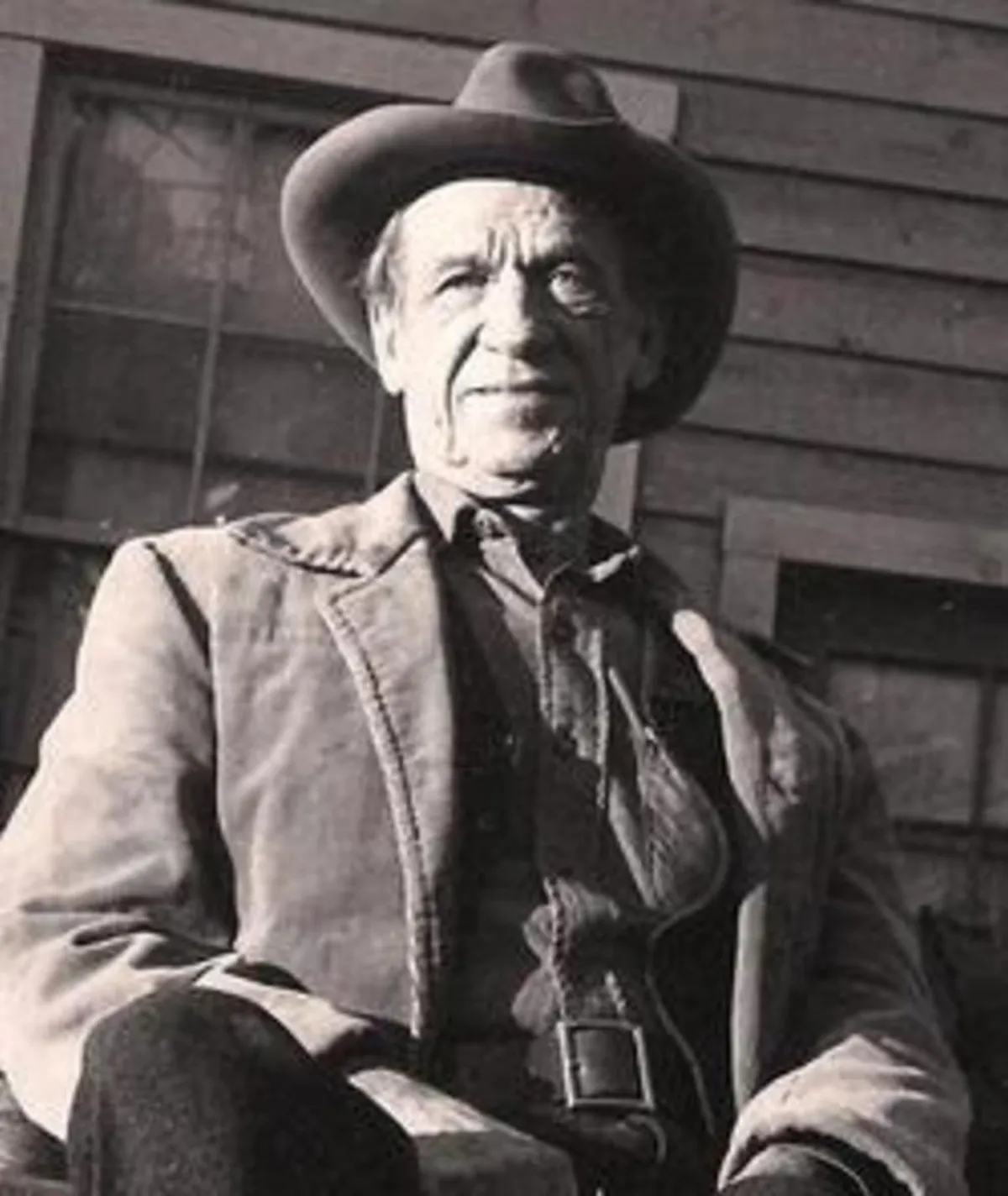 Photo: Harold "Hank" Patterson, via images.mubicdn.net
The Mix-Up That Made History
The chaos began months earlier when Millerville's town council decided to hold a special election to fill a mayoral vacancy. Due to a clerical error in the town charter, two separate election processes were triggered simultaneously. The first followed the standard municipal election procedures, while the second was organized under an obscure provision meant for emergency appointments.
Patterson, a well-meaning but somewhat absent-minded businessman, had filed paperwork for both elections at different times, apparently forgetting about the first when he submitted the second. His friends had encouraged him to run, and in typical small-town fashion, he'd said yes to everyone who asked.
"Hank was the kind of fellow who'd agree to help you move your piano and then show up with a pickup truck," recalled his daughter years later. "He meant well, but details weren't his strong suit."
Two Elections, One Confused Winner
On election day, poll workers set up two separate voting stations in the same building — one for the "regular" mayoral election and another for the "emergency appointment" election. Voters, equally confused, cast ballots in both, thinking they were voting for different positions.
The results were announced that evening: Harold Patterson had won the mayoral race with 67% of the vote. Simultaneously, Harold Patterson had also won the emergency mayoral appointment with 72% of the vote. The same man had been elected mayor twice, by two different margins, in two legally distinct elections.
Town clerk Martha Henley spent the entire night frantically calling the county courthouse, the state elections office, and anyone else who might have answers. Nobody did.
Legal Limbo in the Lone Star State
The situation created a legal puzzle that stumped officials from Austin to Washington. Which election was valid? Could someone be mayor twice? Did Patterson need to be sworn in once or twice? The town's attorney, fresh out of law school, admitted he'd never encountered anything like it in his textbooks.
Meanwhile, Patterson himself remained blissfully unaware of the magnitude of the situation. When reporters from the county newspaper arrived to ask about his "double victory," he assumed they were making a joke about his margin of victory.
"I figured they meant I won by a lot," Patterson later told his family. "Didn't occur to me that I'd actually won two different elections until the lawyers showed up."
The Solomon's Choice Solution
After three weeks of legal consultations and heated town council meetings, officials reached a uniquely American solution: they would recognize both elections as valid but treat them as a single mandate. Patterson would serve one term as mayor, but his victory would be recorded in the official records as coming from both elections.
This decision required creating new paperwork that had never existed before. The Texas Secretary of State's office had to design special certificates acknowledging Patterson's "dual electoral mandate" — language that appears nowhere else in American political history.
The solution satisfied everyone except the county's election lawyers, who spent months trying to figure out how to prevent similar situations in the future.
A Footnote That Won't Go Away
Patterson served his term without incident, focusing on fixing potholes and organizing the annual harvest festival. He never ran for office again, joking that he'd already been elected more times than most politicians could manage in a lifetime.
But his accidental double victory left a permanent mark on American electoral law. The "Millerville Precedent" is still cited in election law textbooks as an example of how unclear municipal codes can create bizarre democratic outcomes. Law students across the country learn about Patterson's case in their constitutional law classes.
The Legacy of Bureaucratic Comedy
Today, Millerville has long since been absorbed into a larger municipality, and the community center where the double election took place is now a parking lot. But Patterson's story lives on in the footnotes of election law journals and the occasional legal brief.
Every few years, when a particularly complex election dispute arises, lawyers somewhere in America will reference "the Texas case where the same guy won twice." It's become shorthand for the kind of bureaucratic tangle that can emerge when well-meaning people encounter poorly written rules.
For Harold Patterson, who passed away in 1987, the whole affair remained a source of gentle amusement. His family still keeps his dual mayoral certificates framed in their living room — a reminder of the day when American democracy got so confused it elected the same man twice, just to be sure.