When America Seriously Considered Nuking the Moon (And Almost Did It)
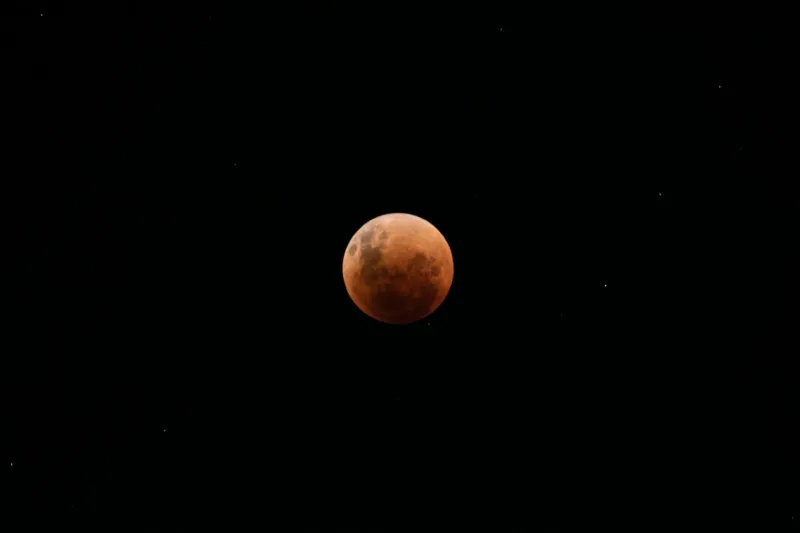
When America Seriously Considered Nuking the Moon (And Almost Did It)
Listen to this premise: In the 1950s, during the Space Race, the United States military seriously—and we mean seriously—considered detonating a nuclear weapon on the surface of the moon.
Not in a science fiction novel. Not in a classified thriller. Not as a joke or a theoretical exercise. As an actual military project with funding, personnel, and a timeline.
You probably haven't heard about this, and that's part of what makes it so strange. It's one of the most surreal "what if" moments in American history, and it's completely real.
The Project That Was Too Weird to Admit
In 1957, the Soviet Union launched Sputnik, the first artificial satellite. America panicked. The Space Race had begun, and the United States was losing.
In the midst of this existential crisis, someone at the U.S. Air Force's Weapons Laboratory in Albuquerque, New Mexico had a truly unhinged idea: What if we nuked the moon? Not to destroy it (obviously). But to demonstrate American technological superiority and, implicitly, military dominance over the Soviet Union.
The project was officially titled "A Study of Lunar Research Flights," but internally it was known as Project A119. And it wasn't some fringe idea entertained by a few eccentric military brass. It was a legitimate research initiative with actual scientists involved.
One of those scientists was a young astronomer named Carl Sagan.
Yes, that Carl Sagan. The man who would later become America's most famous science communicator. The author of Cosmos. The guy who made science accessible and beautiful to millions of people. He did some calculations for a project to nuke the moon.
The Logistics of Lunar Destruction
The plan was straightforward in its insanity: Launch a nuclear-armed rocket to the moon. Detonate it on the lunar surface. Observe the explosion from Earth (and space-based telescopes). Declare victory over the Soviets.
On the surface, it sounds almost reasonable—in a Cold War, mutually-assured-destruction kind of way. But once you start thinking about the actual execution, the whole thing gets weirder.
The scientists involved had to calculate:
- What size nuclear warhead would be needed for a visible explosion from Earth
- The trajectory required to reach the moon
- The timing to ensure optimal observation from Earth
- How to minimize fallout (though, admittedly, this wasn't exactly a priority)
- What the political and diplomatic consequences might be
Sagan's role was to help calculate whether the blast would be visible from Earth with the naked eye. The answer was yes—under the right conditions, humans on Earth would see a massive flash on the lunar surface.
The project had everything: a clear objective, scientific backing, military approval, and what the Air Force considered a compelling geopolitical rationale. What it didn't have was a good reason to actually do it.
The Moment It Almost Became Real
Project A119 remained classified and relatively obscure for decades. But here's the part that should give you chills: it came remarkably close to actually happening.
The project existed from 1957 to 1959. During that window, it had legitimate funding and serious momentum. The Soviet Union didn't have a comparable plan (as far as we know), but the Americans didn't know that at the time. From the Pentagon's perspective, the Soviets could be working on their own lunar nuke right now, and America needed to get there first.
The project was ultimately abandoned in 1959, but not because someone finally said, "Wait, this is completely insane." It was abandoned because:
- The Soviets successfully landed on the moon first (with an unmanned probe) without needing to nuke it
- The political calculus changed—a nuclear explosion on the moon, even an intentional one, carried too many diplomatic risks
- Cooler heads eventually prevailed, and the Air Force realized that detonating a nuclear weapon on another celestial body might be a violation of international agreements (it would be—the Outer Space Treaty, signed in 1967, explicitly prohibited it)
But for two years, this was real. Scientists were working on it. Money was being spent on it. Sagan was calculating blast radiuses for it.
What This Reveals About Cold War Desperation
Project A119 is fascinating not because it was a good idea—it absolutely was not—but because it reveals something true about the Cold War mindset. The competition with the Soviet Union was so intense, so all-consuming, that even the most absurd proposals received serious consideration.
The logic went something like this: The Soviets are ahead in space. We need to demonstrate American superiority. What's the most dramatic, undeniable way to do that? Blow up the moon.
It's the kind of thinking that only emerges in a context of extreme geopolitical anxiety. In a normal time, in a normal government, someone would laugh such a proposal out of the room immediately. But in 1957-1959, with Soviet satellites orbiting overhead and American pride wounded, even the Pentagon's institutional caution couldn't prevent serious people from seriously considering it.
The Cosmic Irony
Here's the final quirk: Carl Sagan, the man who helped calculate the blast radius for a nuclear bomb on the moon, would later spend his career arguing passionately for peaceful space exploration and the preservation of worlds beyond Earth. He became an advocate for planetary protection—the idea that we have a moral obligation not to contaminate other worlds with our presence.
One wonders if his involvement with Project A119 influenced that philosophy. Did he see, firsthand, how easily military thinking could override scientific wisdom? Did he realize that the same impulses that drove people to consider nuking the moon were the impulses that threatened humanity's future?
We'll never know. But it's a remarkable arc: from calculating lunar bomb blasts to teaching millions of people to appreciate the cosmos with wonder and respect.
A Reminder That Reality Is Stranger Than Fiction
Project A119 is exactly the kind of story that, if it appeared in a novel or a film, would be dismissed as too implausible. "Nobody would actually consider that," a reader might think. "It's too absurd."
But it happened. It was real. And it came close enough to actually occurring that we live in a timeline where it could have happened. We're one or two different political decisions away from a nuclear explosion on the moon.
That's the real strangeness: not that someone proposed it, but that it took until 1967 for the international community to formally agree that nuking celestial bodies was off-limits. Until then, it was theoretically legal.