The Government's Best-Kept Neighborhood: How the Post Office Secretly Ran a Fake Town for Four Decades
Welcome to Nowhere, Population: Classified
In the rolling hills of West Virginia, nestled among genuine small towns with genuine residents living genuine lives, sat one of the most elaborate deceptions in American government history. For nearly four decades, the tiny community of Corbin, West Virginia, was home to postal workers, shop owners, teachers, and families—none of whom were who they claimed to be.
Every resident was a federal agent. Every business was a government front. Every daily interaction was part of an ongoing undercover operation designed to catch mail fraud on a scale that would make Hollywood screenwriters jealous.
The most remarkable part? It actually worked.
The Post Office's Secret Agent Problem
The story begins in the early 1950s, when the United States Postal Service faced a growing crisis. Mail fraud was exploding across the country, from simple con games to elaborate schemes that bilked Americans out of millions of dollars annually. The problem was so severe that postal inspectors—the federal agents responsible for investigating mail crimes—were overwhelmed.
Traditional law enforcement training wasn't cutting it. Postal inspectors needed to understand how mail fraud actually worked from the inside. They needed to see how criminals built trust with victims, how they used the mail system to avoid detection, and how they laundered money through legitimate-looking businesses.
So the Postal Service came up with a solution that was either brilliant or completely insane, depending on your perspective: they would build an entire fake town where agents could practice being criminals.
Building a Government Potemkin Village
The location chosen for this experiment was perfect—a small valley in West Virginia that was isolated enough to maintain secrecy but accessible enough for government oversight. The Postal Service quietly purchased several hundred acres and began construction of what would become the most elaborate training facility in federal law enforcement history.
Corbin wasn't just a few buildings thrown together for appearances. It was a fully functioning community complete with:
- A main street lined with shops and businesses
- Residential neighborhoods with actual houses
- A post office (naturally)
- A bank
- A diner
- A gas station
- A small newspaper
- Even a church
Every detail was carefully crafted to create an authentic small-town atmosphere. The buildings weren't Hollywood facades—they were real structures with working plumbing, electricity, and all the mundane details that make a place feel genuine.
The Residents of Nowhere
The most crucial element of Corbin wasn't the buildings—it was the people. The Postal Service recruited dozens of agents to live in the town full-time, creating elaborate cover identities that they would maintain for months or even years at a time.
Agent John Smith might become "Bob Henderson," a hardware store owner with a wife and two kids. Agent Mary Johnson might become "Linda Patterson," a teacher at the local school. These weren't just day jobs—agents lived their cover identities 24/7, developing relationships with their "neighbors" and participating in the full social life of the community.
The psychological commitment required was extraordinary. Agents had to remember not just their own fake backgrounds, but the fake backgrounds of everyone around them. They attended church services conducted by other agents, shopped at stores run by other agents, and sent their (fake) children to schools taught by other agents.
The Training Ground for Mail Fraud
Once the town was established and populated, the real work began. Corbin became a laboratory for mail fraud schemes, with agents rotating between playing criminals, victims, and investigators.
A typical training scenario might unfold like this: Agent "Bob Henderson" would receive a letter at his hardware store offering him a chance to invest in a revolutionary new product. The letter would be sent by Agent "Linda Patterson," who was playing the role of a mail fraud perpetrator. Agent "Tom Wilson," the local bank manager, would help "Bob" wire money to "Linda's" fake company.
Meanwhile, other agents would practice intercepting the mail, building cases, and conducting investigations—all within the controlled environment of their artificial community.
The scenarios became increasingly sophisticated over the years, incorporating new types of fraud as they emerged in the real world. Agents practiced everything from simple lottery scams to complex investment frauds that involved multiple conspirators across several states.
Keeping the Secret
Maintaining the secrecy of Corbin required constant vigilance. The town was officially designated as a "postal training facility," which was technically true but deliberately vague. Local residents in surrounding areas were told that it was a place where postal workers learned new procedures and technologies.
Delivery drivers and service workers who had to enter the town were carefully managed. They were escorted by agents and only allowed to see specific areas. Any outsider who asked too many questions was politely but firmly discouraged from visiting.
The Postal Service also had to maintain the fiction in government records. Corbin appeared on some federal maps and documents as a legitimate community, complete with a ZIP code and official population count. The agents living there filed tax returns, registered to vote, and maintained all the paperwork that real residents would have.
The Unraveling
Corbin's secret began to unravel in the late 1980s, not because of any security breach, but because of changing priorities within the Postal Service. Mail fraud was evolving rapidly with new technologies, and the elaborate role-playing exercises that worked well for traditional schemes were less effective against computer-based crimes.
Budget pressures also played a role. Maintaining an entire fake town was enormously expensive, requiring not just the salaries of dozens of agents but also the costs of maintaining buildings, utilities, and all the infrastructure of a real community.
By the early 1990s, postal inspectors were increasingly trained using computer simulations and shorter-term undercover assignments rather than the immersive, long-term approach that Corbin represented.
The Final Curtain
The official closure of Corbin came in 1991, though the Postal Service continued to maintain the buildings for several more years. The transition was carefully managed—agents were gradually reassigned to other duties, and the town's "population" slowly dwindled until only a skeleton crew remained to maintain the property.
The revelation of Corbin's true nature came not through investigative reporting or government leaks, but through a Freedom of Information Act request filed by a researcher studying postal history. Even then, many details remained classified, and the full extent of the operation wasn't publicly known until the early 2000s.
The Legacy of a Fake Town
Corbin's 37-year run was remarkably successful by any measure. Postal inspectors trained there went on to solve thousands of mail fraud cases, saving Americans millions of dollars and putting countless criminals behind bars. The immersive training they received gave them insights into criminal psychology and methodology that proved invaluable in real investigations.
The town also pioneered techniques that are now standard in law enforcement training. The idea of creating realistic scenarios where agents can practice complex undercover work has been adopted by agencies from the FBI to local police departments.
The Town That Never Was
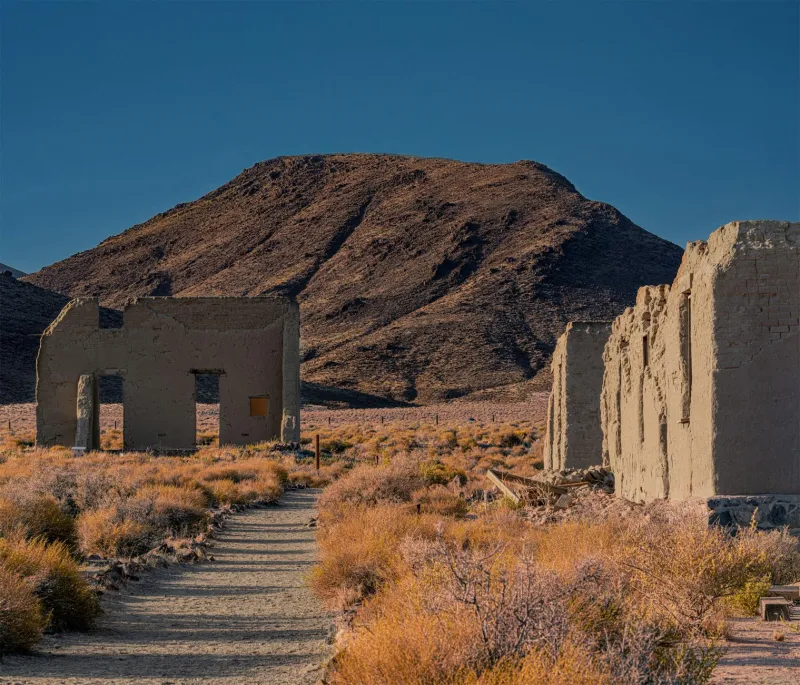
Today, the site of Corbin sits empty, slowly being reclaimed by the West Virginia wilderness. The buildings remain, though they're deteriorating after decades of abandonment. Occasionally, hikers stumble across the remnants of main street or the old post office, creating their own mystery about the ghost town that appears on no tourist maps.
For those who lived and worked there, Corbin represents one of the strangest chapters in their careers—a place where nothing was real except the dedication of the people who made it convincing. It was a town built on lies that served the truth, a community of actors playing roles in service of justice.
The story of Corbin proves that sometimes the most effective way to fight deception is with even more elaborate deception. For four decades, the United States Postal Service ran the most successful fake town in American history—and almost nobody knew it existed.