The Moldy Miracle: How a Messy Lab and Lucky Accidents Gave Us Medicine's Greatest Lifesaver
The Setup for Serendipity
Imagine if one of medicine's greatest breakthroughs almost never happened because a scientist was too messy, too distracted, and too ready to throw things away. That's exactly what nearly occurred with penicillin—except the story is far stranger than just Alexander Fleming's famous "lucky accident."
Most people know the basic tale: in 1928, Fleming noticed that a mysterious mold had contaminated one of his bacterial cultures at St. Mary's Hospital in London, and somehow this mold was killing the bacteria around it. What they don't know is that this discovery was just the beginning of an impossibly unlikely chain of events that almost prevented penicillin from ever reaching a single patient.
The Accident That Almost Wasn't
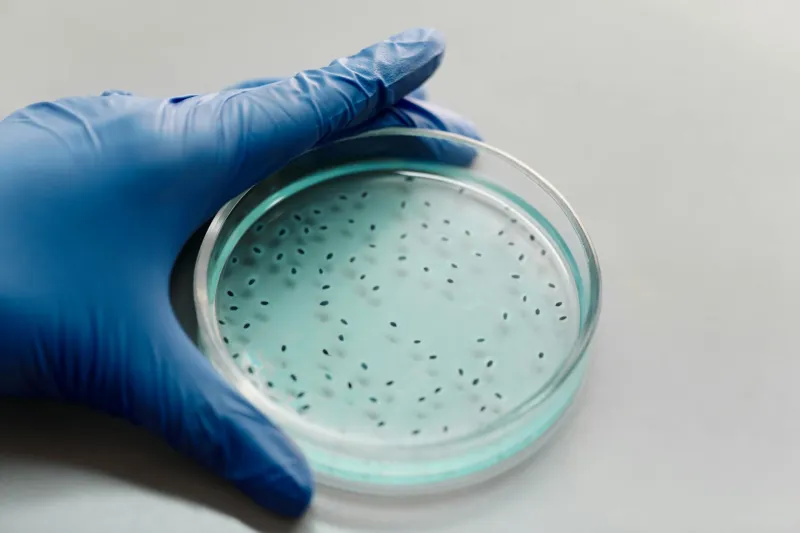
Fleming's laboratory was notorious for being chaotic. Petri dishes stacked everywhere, experiments left unattended for weeks, and a general atmosphere that would make modern lab safety inspectors faint. On that fateful day in September 1928, Fleming was actually cleaning up his mess—something he rarely did—when he noticed the contaminated dish.
Here's where it gets weird: Fleming later admitted he was about to toss the dish into a disinfectant solution when a colleague, Merlin Pryce, stopped by to chat. While showing Pryce his work, Fleming picked up the contaminated dish again and noticed something extraordinary. The mold had created a clear zone around itself where no bacteria could grow.
If Pryce hadn't dropped by at that exact moment, Fleming would have destroyed what would become the foundation for modern antibiotics.
The Mystery Mold's Impossible Journey
But where did this miracle mold come from? This is where the story becomes almost unbelievable.
The mold didn't just float in through Fleming's window, as many assume. It actually came from the laboratory directly below Fleming's—a mycology lab run by C.J. La Touche, who was studying mold spores for his research on asthma. La Touche had been growing various mold samples, including the specific strain of Penicillium notatum that would change history.
Somehow, spores from La Touche's lab drifted upward through the building's ventilation system and landed in Fleming's dish. But here's the kicker: La Touche's mold sample had originally come from a house in London where it was growing on a decaying hyssop plant. The homeowner had brought it to the hospital because family members were getting sick, suspecting the mold was the culprit.
So the mold that would eventually save millions of lives was initially brought to the hospital because people thought it was making them ill.
The Near-Death of a Miracle
Fleming published his findings in 1929, but then something almost tragic happened: nobody cared. The medical community largely ignored his discovery. Fleming himself struggled to purify the mold's active ingredient and eventually moved on to other projects.
For over a decade, penicillin sat forgotten in scientific literature while people continued dying from infections that could have been easily cured. Fleming's culture samples were stored away, and several times the hospital nearly threw them out during routine cleanings.
The Wartime Rescue
In 1940, with World War II raging and wounded soldiers dying from infected wounds, two Oxford researchers—Howard Florey and Ernst Boris Chain—stumbled across Fleming's old paper while researching antibacterial substances. They decided to investigate this forgotten discovery.
But here's where another incredible coincidence occurred: Florey and Chain needed Fleming's original mold strain to continue their work. The problem? Fleming's samples were nearly dead after eleven years of storage. They managed to revive just enough of the culture to continue their research, literally bringing penicillin back from the brink of extinction.
The Production Miracle
Even then, the story almost ended badly. The Oxford team proved penicillin worked, but they couldn't produce enough for widespread use. British pharmaceutical companies were too focused on the war effort to help, and the researchers were running out of options.
In a desperate move, Florey and Chain traveled to the United States in 1941 to seek help from American companies. They smuggled their precious mold samples by literally rubbing spores into the fabric of their coat pockets—if the Germans had captured them, they could have destroyed the samples and set back antibiotic development by years.
American companies, particularly in Peoria, Illinois, agreed to help. But they needed to find a way to mass-produce the mold. After testing hundreds of different strains, they discovered that a sample growing on a cantaloupe in a Peoria market produced twenty times more penicillin than Fleming's original strain.
The woman who found this cantaloupe, lab technician Mary Hunt, became known as "Moldy Mary" for her ability to spot promising mold samples. She literally found the key to mass-producing penicillin while grocery shopping.
The Impossible Chain Reaction
Think about this impossible sequence: A homeowner brings a "dangerous" mold to a hospital. Spores drift upward through a building's ventilation system. A messy scientist almost throws away a contaminated dish but gets distracted by a colleague. The discovery gets ignored for over a decade. Researchers revive nearly-dead samples just in time for a world war. Scientists smuggle mold spores in their coat pockets across the Atlantic. A lab technician finds the perfect production strain on a piece of fruit at the grocery store.
Remove any single element from this chain, and penicillin might never have been developed—or at least not for many more years. Millions of people who lived because of antibiotics might never have been born.
The Accidental Legacy
Today, penicillin and other antibiotics have saved an estimated 200 million lives. All because of a series of accidents, coincidences, and near-disasters that sound too improbable to be true.
Fleming himself once said, "One sometimes finds what one is not looking for." In his case, he found something that would reshape human civilization, hidden in the mess of his own laboratory. Sometimes the most important discoveries happen not despite our mistakes, but because of them.