The Million-Dollar Mistake: How One Misplaced Comma Made a Farm Family Secret Real Estate Moguls
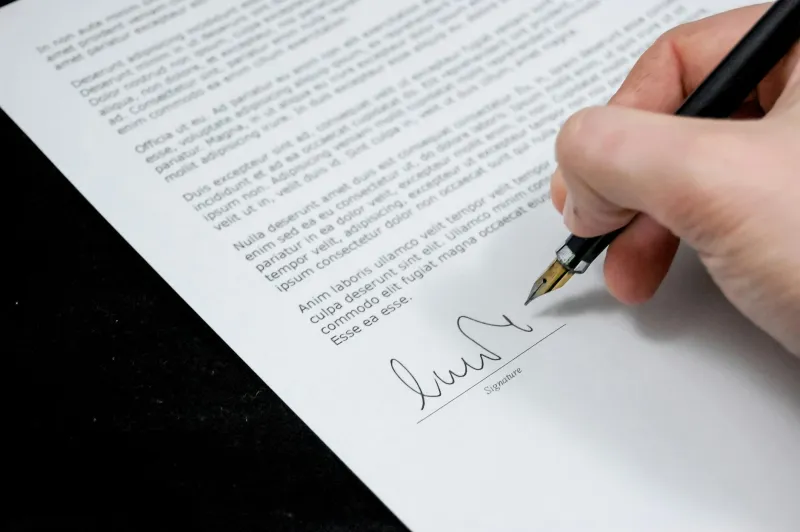
The Day a Pen Slip Changed Everything
Imagine discovering that your great-great-grandfather accidentally owned half of downtown Manhattan—and your family had been quietly paying taxes on it for over a century without knowing. That's essentially what happened to the Miller family of Chicago in 1987, when a routine property dispute uncovered one of the most profitable clerical errors in American history.
The story begins in 1887, during Chicago's explosive growth following the Great Fire. The city was expanding at breakneck speed, and property transactions were happening so fast that overwhelmed clerks often worked 16-hour days just to keep up with the paperwork.
A Farmer's Simple Land Purchase Goes Horribly Right
John Miller was a simple wheat farmer from outside Chicago who wanted to buy a small plot of land near the city center for his son's modest general store. The property he intended to purchase was Lot 47 on State Street—a narrow slice of land barely wide enough for a storefront.
But when the exhausted city clerk transcribed the deed, his pen betrayed him at the worst possible moment. Instead of writing "Lot 47," he accidentally wrote "Lots 4-7," transforming Miller's modest purchase into ownership of an entire city block of prime downtown real estate.
The mathematical difference was staggering. Miller had paid $200 for what he thought was a 25-foot storefront. What he actually received was legal ownership of four full lots totaling nearly 400 feet of State Street frontage—land that would become some of the most valuable real estate in America.
The Family That Never Looked a Gift Horse in the Mouth
Here's where the story gets even stranger: the Miller family never questioned their good fortune. When John Miller received his deed and saw he owned far more land than expected, he simply assumed the city had been generous or made an error in his favor. Being an honest farmer, he dutifully paid property taxes on all four lots every year.
For decades, the Millers watched as Chicago exploded around them. Skyscrapers rose on neighboring blocks. Department stores and hotels opened within walking distance. The city's population tripled, then quadrupled. Yet somehow, no one from the city government ever came knocking to reclaim what should have been public land.
The family built their modest general store on one corner of their property and rented out the rest to various small businesses. They weren't getting rich, but the rental income provided a comfortable living. They had no idea they were sitting on a gold mine.
Three Generations of Accidental Landlords
John Miller passed the property to his son Thomas, who passed it to his daughter Margaret, who eventually left it to her nephew Robert. Each generation faithfully paid the taxes and collected modest rent, never suspecting that their unassuming family property was actually one of the most valuable undeveloped parcels in downtown Chicago.
By the 1980s, Chicago's downtown real estate market was absolutely booming. Developers were paying millions for single lots, and Robert Miller—now in his seventies—was still collecting a few hundred dollars a month in rent from a handful of small shops.
The Discovery That Changed Everything
The truth finally came to light in 1987 when a major development company tried to purchase the block for a massive mixed-use project. Their lawyers conducted the routine title search and discovered something impossible: according to city records, the municipality owned Lots 5, 6, and 7, but a private family somehow held clear title to Lot 4 and something called "Lots 4-7."
The legal team spent months untangling the century-old paperwork puzzle. When they finally traced the error back to that tired clerk's misplaced hyphen in 1887, they realized the Miller family had legitimate ownership of property now worth an estimated $12 million.
The Honest Mistake That Rewrote Property Law
The case became a landmark in property law, establishing important precedents about adverse possession and the statute of limitations on clerical errors. The Miller family had not only paid taxes on the property for over 100 years—they had openly occupied and improved it, meeting every legal requirement for legitimate ownership.
The city initially fought the claim, but their case was hopeless. The Miller family had a clear chain of title, decades of tax payments, and a century of continuous occupation. In the end, Chicago had no choice but to acknowledge that a single clerical error had quietly transferred millions of dollars in public land to a private family.
The Millionaires Who Never Knew They Were Rich
Robert Miller, who had been living modestly on social security and rental income from his "small" property, suddenly found himself worth over $12 million. The development company eventually purchased the land from the Miller family for $15 million—making them some of the most accidental millionaires in American history.
The story serves as a fascinating reminder of how fragile our systems of property ownership really are. A single tired clerk's minor mistake in 1887 quietly rewrote the ownership of prime downtown real estate, and it took exactly 100 years for anyone to notice.
Today, the former Miller property is home to a gleaming office tower worth hundreds of millions. And somewhere in Chicago, the descendants of a humble wheat farmer are probably still amazed that great-great-grandpa John's "lucky break" was actually the most profitable typo in their family's history.