The Ink Problem That Accidentally Changed How America Stays Cool
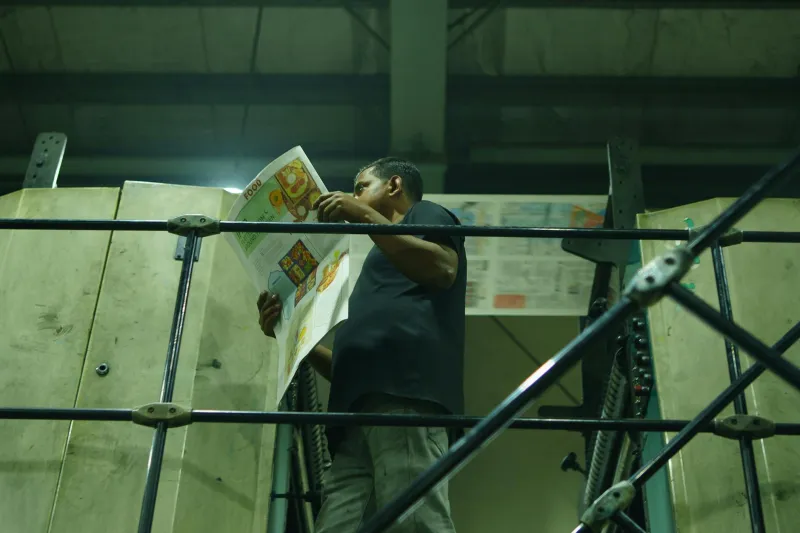
When Ink Ruins Everything
Picture this: It's 1902, and you're running a printing company in Brooklyn during one of the most brutal summers on record. Your expensive magazine pages are coming out looking like watercolor disasters, with ink bleeding across the paper like spilled coffee. Your deadline is looming, your clients are furious, and every day the problem gets worse as the humidity climbs.
This wasn't just an inconvenience—it was a business-killing crisis. The Sackett-Wilhelms Lithographing and Publishing Company was hemorrhaging money as page after page of their high-end color work became unusable. In desperation, they called in a 25-year-old engineer from the Buffalo Forge Company named Willis Carrier.
Carrier had been sent to solve what seemed like a simple problem: figure out why the printing presses couldn't handle New York's sticky summer air. But what happened next would accidentally revolutionize American civilization in ways no one could have imagined.
The Accidental Genius of Problem-Solving
Carrier approached the printing crisis like any good engineer: by breaking down the problem into its components. The issue wasn't really the heat—it was the moisture in the air that made paper expand and contract unpredictably. When paper changes size between color runs, your registration goes haywire, and your expensive four-color printing job turns into expensive garbage.
His solution was elegantly simple: create a machine that could control both temperature and humidity with mathematical precision. He designed a system that blew air over coils filled with cold water, which not only cooled the air but removed moisture from it. The result was perfectly stable conditions for printing—and as a happy side effect, a much more comfortable workspace.
The first "Apparatus for Treating Air" was installed on July 17, 1902. It worked flawlessly. The printing problems vanished overnight, the company saved its contracts, and Carrier got paid for a job well done.
What nobody realized was that this humidity-fighting machine had just solved one of humanity's oldest problems: how to stay comfortable when nature turns up the heat.
The Invention That Nobody Knew They Needed
For the first few years, Carrier's invention remained focused on industrial applications. Textile mills used it to prevent cotton threads from breaking in dry conditions. Pharmaceutical companies installed the systems to keep medicines stable. Tobacco manufacturers discovered it helped maintain consistent moisture levels in their products.
But then something unexpected happened. Workers in these air-conditioned facilities started requesting transfers to the "cool buildings." Productivity soared in conditioned spaces. People lingered longer in stores and theaters that had installed the systems. Slowly, business owners began to realize they weren't just buying industrial equipment—they were purchasing customer comfort.
The first deliberate attempt to cool people rather than processes came in 1906, when Carrier's company installed a system in a North Carolina textile mill specifically to improve working conditions. The results were immediate and dramatic: worker productivity increased, sick days decreased, and employee satisfaction went through the roof.
How Ink Problems Reshaped America
By the 1920s, what started as a printing press fix had begun transforming American society. Movie theaters were among the early adopters, advertising "20 degrees cooler inside" during summer heat waves. Department stores followed, discovering that comfortable customers were buying customers. Restaurants found that air conditioning could extend their busy season year-round.
But the real revolution came after World War II, when residential air conditioning became affordable for middle-class families. Suddenly, the American South—previously considered too hot and humid for large-scale development—became habitable year-round. Cities like Phoenix, Las Vegas, Houston, and Miami exploded in population. The Sun Belt was born from a machine originally designed to dry ink.
The migration patterns were staggering. Between 1950 and 2000, the South and Southwest gained over 100 million residents, many of them drawn by the promise of climate-controlled comfort that Carrier's accidental invention had made possible.
The Printing Press Connection That Changed Everything
Perhaps the most remarkable aspect of this story is how perfectly it illustrates the unpredictable nature of innovation. Carrier wasn't trying to revolutionize American demographics or transform global architecture. He wasn't dreaming of enabling the rise of Las Vegas or making summer blockbuster movies possible. He was just trying to help a Brooklyn printer meet a deadline.
The printing industry connection runs even deeper than most people realize. Those early humidity-controlled print shops didn't just produce better magazines—they produced the first generation of workers who experienced climate-controlled comfort as a normal part of their day. These workers became the early advocates and adopters who helped spread air conditioning beyond its industrial origins.
The Cool Truth About Hot Solutions
Today, as Americans consume more electricity for air conditioning than the entire continent of Africa uses for all purposes combined, it's worth remembering that this massive infrastructure of comfort began with one frustrated printer and one methodical engineer in a sweltering Brooklyn workshop.
Willis Carrier lived to see his ink-drying machine transform into a $100 billion industry that reshaped American geography, architecture, and daily life. When he died in 1950, the United States was in the middle of the greatest internal migration in its history—millions of people moving south and west, following the cool air that his accidental invention had made possible.
The next time you step into a perfectly climate-controlled space on a blazing summer day, remember: you're experiencing the unintended consequence of a printing deadline that couldn't wait for cooler weather.