The Forgotten Sentinel: When Military Loyalty Outlasted the War Itself
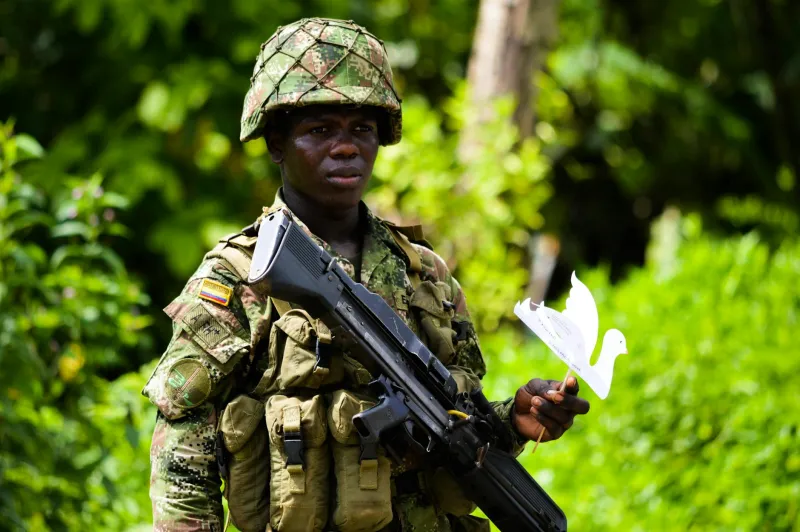
The Soldier Time Forgot
Imagine spending years of your life defending a cause that ceased to exist before you even knew it was over. That's exactly what happened to Egas Moniz Martins, a Portuguese soldier whose unwavering dedication turned him into one of history's most tragic—and absurd—examples of military loyalty gone wrong.
In the early 1970s, as Portugal's African colonial empire was crumbling faster than anyone in Lisbon cared to admit, Martins found himself stationed at a remote outpost deep in the Portuguese territory of Guinea-Bissau. His orders were simple: defend the position, maintain communication when possible, and await further instructions. What nobody told him—because nobody bothered to check—was that those further instructions would never come.
When Bureaucracy Meets Geography
The problem wasn't that Martins was a bad soldier. Quite the opposite. He was so good at following orders that he kept following them long after the people who gave them had moved on to other concerns. While revolutionary movements swept across Portuguese Africa and Lisbon's colonial administration collapsed under international pressure, Martins remained at his post, dutifully maintaining a military presence for a country that had quietly walked away from the fight.
The geographic isolation that made his outpost strategically valuable also made it a perfect place to be forgotten. Tucked away in dense jungle terrain with unreliable communication equipment, Martins and his small unit became invisible to the very military hierarchy they served. Radio calls went unanswered not because of enemy interference, but because there was literally no one left on the other end to pick up.
The War That Ended Without Notice
By 1974, Portugal's Carnation Revolution had fundamentally changed the country's approach to its African colonies. The new government in Lisbon was actively seeking ways to divest itself of expensive colonial commitments, and Guinea-Bissau's independence became official reality. Treaties were signed, flags were lowered, and colonial administrators packed their bags and headed home.
But somehow, in the chaos of decolonization and regime change, nobody remembered to tell Egas Moniz Martins.
While the rest of the world moved on, Martins continued his routine: morning patrols, equipment maintenance, and the endless waiting that defines military life. He rationed supplies carefully, maintained discipline among his men, and kept detailed logs of activities—all in service of a mission that had been officially terminated by people who had completely forgotten he existed.
The Loyalty That Wouldn't Quit
What makes Martins' story so remarkable isn't just the bureaucratic failure that created it, but his response to increasingly obvious signs that something had gone wrong. As months stretched into years without resupply or communication, any reasonable person might have assumed they'd been abandoned. But Martins wasn't just any reasonable person—he was a soldier who took his oath seriously.
Rather than abandon his post, he adapted. When supplies ran low, he organized foraging expeditions. When equipment broke down, he improvised repairs. When his men questioned whether anyone still cared about their mission, he reminded them of their duty. In his mind, the absence of orders didn't mean the absence of responsibility.
The Rude Awakening
Martins' vigil finally ended not through official channels, but through the kind of accidental encounter that seems too convenient for fiction. A group of international aid workers, stumbling across his outpost during a routine survey, found themselves face-to-face with a Portuguese military unit that, according to all official records, shouldn't have existed.
The conversation that followed must have been surreal. Imagine trying to explain to someone who's spent years defending Portuguese colonial interests that Portugal no longer had colonial interests to defend. That the country he'd been protecting had achieved independence years earlier. That his government had not only ended the war he was fighting, but had completely forgotten to mention it to him.
The Price of Perfect Dedication
Egas Moniz Martins' story reveals something uncomfortable about the nature of institutional loyalty. His dedication was so complete that it outlasted the very institution he served. He became more Portuguese than Portugal itself, more committed to the colonial mission than the colonial power that had abandoned it.
In an era when military service is often viewed cynically, Martins represents both the best and worst of soldier mentality. His faithfulness was admirable, but it was also tragically misplaced. He gave years of his life to a cause that his own government had decided wasn't worth fighting for—they just forgot to tell him.
The Echo of Forgotten Wars
Martins wasn't the only soldier to find himself fighting wars that had already ended. Similar stories emerged from other corners of Portugal's former empire, and indeed from other colonial powers facing rapid decolonization. The combination of poor communication, geographic isolation, and military culture created perfect conditions for these temporal anomalies.
But few cases were as stark as Martins', where the gap between reality and perception stretched across years rather than months. His story serves as a reminder that history's strangest chapters often emerge not from grand conspiracies or dramatic events, but from the simple human failure to keep track of what we've started—and what we've finished.
In the end, Egas Moniz Martins became something unique in military history: a soldier so dedicated to his duty that he outlasted the war itself. Whether that makes him history's greatest soldier or its most tragic figure might depend on your perspective. But there's no denying it makes him one of the most unforgettable.