The Forgotten Border Town That Accidentally Became a Country for Half a Century
The Forgotten Border Town That Accidentally Became a Country for Half a Century
Imagine living your entire life as an American citizen, only to discover that technically, legally, officially — you've been stateless for decades. That's exactly what happened to the 200-odd residents of a small farming community straddling the Maryland-Virginia border, who unknowingly spent half a century living in bureaucratic limbo.
When Good Surveys Go Bad
The trouble started in 1847, when Congress commissioned a boundary survey to settle a long-running dispute between Maryland and Virginia. The two states had been bickering over a roughly 12-mile stretch of land along the Potomac River since colonial times, with each claiming the territory based on conflicting royal charters from the 1600s.
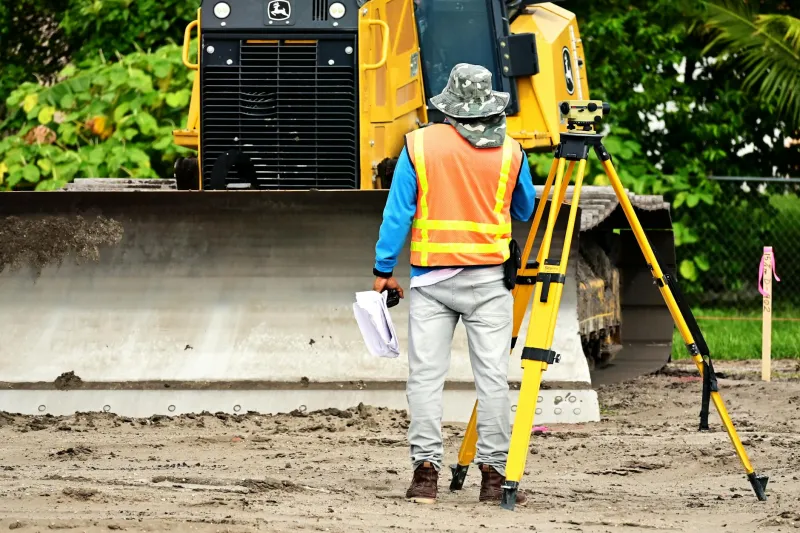
Enter surveyor James McNeal, a competent professional with one fatal flaw: terrible handwriting. McNeal's team spent months trudging through marshland and forest, carefully measuring angles and distances. But when McNeal transcribed his field notes into the official report, he made a seemingly minor error. Instead of marking the boundary line at "38 degrees, 47 minutes, 12 seconds North," he wrote "38 degrees, 47 minutes, 21 seconds North."
Nine seconds of latitude doesn't sound like much. But on the ground, those nine seconds translated to nearly 900 feet — enough to accidentally place the entire settlement of Riverside Mills outside both Maryland and Virginia.
Life in Legal Limbo
The residents of Riverside Mills went about their lives completely unaware that they were now, technically speaking, citizens of nowhere. They paid taxes to Maryland (which Maryland happily collected), voted in Virginia elections (which Virginia cheerfully counted), and received mail through the U.S. Postal Service (which delivered it without question).
Meanwhile, the federal government filed McNeal's survey in the National Archives, where it gathered dust alongside thousands of other boundary documents. Congress rubber-stamped the new border, and both Maryland and Virginia updated their official maps. On paper, Riverside Mills had vanished from the United States entirely.
The Accidental Republic
For 50 years, this bureaucratic ghost zone operated in perfect ignorance. Couples got married in ceremonies that weren't legally valid in any U.S. state. Children were born who weren't technically American citizens. Property changed hands in transactions that existed in a legal gray area.
The community's unofficial "mayor," a mill owner named Thomas Garrett, unknowingly presided over what was essentially a tiny independent republic. Garrett settled disputes, organized community events, and even collected informal taxes to maintain the local roads — all without any legal authority from any recognized government.
"We were the freest Americans who ever lived," joked Garrett's grandson years later, "because technically, we weren't Americans at all."
The Discovery
The charade finally ended in 1897, when Washington lawyer Charles Whitman was researching property titles for a client interested in buying land near Riverside Mills. Whitman noticed something odd: according to the official surveys, his client's prospective purchase was located in what appeared to be international waters of the Potomac River.
Curious, Whitman dug deeper. He cross-referenced McNeal's 1847 survey with earlier colonial boundary markers and quickly realized the error. A simple transcription mistake had accidentally erased an entire community from the map.
The Quiet Fix
Whitman brought his discovery to the attention of the Interior Department, expecting bureaucratic chaos. Instead, he found bureaucratic embarrassment. Rather than admit that the federal government had lost track of 200 American citizens for half a century, officials quietly commissioned a new survey.
The "corrective survey" of 1898 mysteriously relocated the Maryland-Virginia border to exactly where it should have been all along. The residents of Riverside Mills woke up one morning to discover they were Americans again — not that they'd ever realized they'd stopped being Americans in the first place.
No public announcement was ever made. No newspapers covered the story. The government simply filed the new survey and pretended the old one had never existed.
The Strangest Part
Perhaps the most remarkable aspect of this story isn't that a surveying error created an accidental republic — it's that nobody cared. For 50 years, the residents of Riverside Mills lived outside the legal jurisdiction of any government, and society functioned perfectly well.
They proved that sometimes, the most effective government is the one that doesn't know it exists.
Today, a historical marker along Route 301 commemorates the approximate location of Riverside Mills, though the community itself was eventually absorbed into larger neighboring towns. The marker makes no mention of the area's unusual legal status — a final bureaucratic decision to let sleeping surveys lie.