
The Disease That Medicine Forgot
Imagine falling asleep one night in 1920 and waking up in 1969, only to discover that nearly half a century had passed while you remained frozen in place, aware but unable to move, speak, or fully engage with the world around you. For thousands of people worldwide, this nightmare scenario became reality thanks to a mysterious epidemic that medical science still can't fully explain.
Encephalitis lethargica — literally "sleepy brain inflammation" — appeared seemingly out of nowhere during World War I and vanished just as mysteriously a decade later. But its victims remained trapped in a living purgatory that would challenge everything doctors thought they knew about consciousness, the human brain, and what it means to be truly alive.
When Sleep Became a Prison
The disease started innocuously enough. Patients complained of severe headaches, double vision, and overwhelming fatigue. Within days, many slipped into what appeared to be an extended sleep. But this wasn't ordinary slumber — these patients could be roused temporarily, their eyes would track movement, and they seemed dimly aware of their surroundings. They existed in a twilight zone that defied medical classification.
Dr. Constantin von Economo, the Austrian neurologist who first described the condition in 1917, was baffled by what he observed. "The patients lie motionless in bed," he wrote, "their faces mask-like, their eyes open but unseeing, as if their souls have departed while their bodies remain behind."
 Photo: Dr. Constantin von Economo, via playback.fm
The epidemic spread with terrifying speed. Within a year, cases appeared across Europe, then jumped to North America, Asia, and beyond. Conservative estimates suggest that over one million people contracted the disease, with mortality rates reaching 40%. But for many survivors, death might have been merciful compared to what lay ahead.
The Living Statues
Those who survived the acute phase of encephalitis lethargica didn't recover — they transformed into something medicine had never encountered before. Patients developed a condition called post-encephalitic parkinsonism, but this went far beyond typical Parkinson's disease. They became living statues, frozen in whatever position they happened to be in when the disease took hold.
Some patients stood motionless for hours, their arms raised mid-gesture as if stopped in time. Others remained seated, staring straight ahead with unblinking eyes. They could hear conversations around them, understand what was happening, but couldn't respond or move voluntarily. Their families watched helplessly as their loved ones became prisoners in their own bodies.
At Bronx State Hospital in New York, Dr. Oliver Sacks encountered dozens of these "frozen" patients in the 1960s. He described walking through wards filled with people who had been motionless for decades, some since the 1920s. "They were like living fossils," he later wrote, "human beings preserved in the amber of their illness."
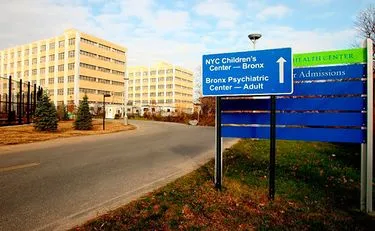 Photo: Bronx State Hospital, via www.asylumprojects.org
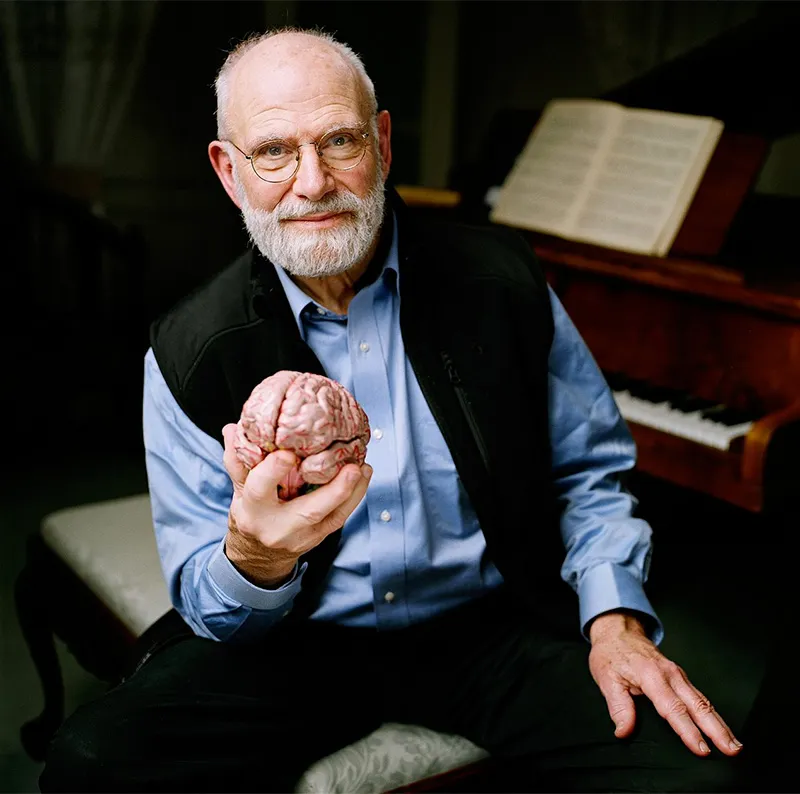 Photo: Dr. Oliver Sacks, via www.oliversacks.com
The Miracle That Almost Was
In 1969, everything changed. Dr. Sacks began experimenting with L-DOPA, a new drug being used to treat Parkinson's disease. The results were nothing short of miraculous — and deeply unsettling.
Patients who hadn't moved or spoken in 40 years suddenly came alive. They sat up, began talking, and tried to resume conversations that had been interrupted decades earlier. Rose R., who had been frozen since 1926, awakened believing it was still the Roaring Twenties. She asked about silent movie stars and wondered why everyone looked so old.
Leonard L., catatonic since 1927, suddenly began writing letters to friends who had died decades earlier. He couldn't comprehend that the world had moved on without him — that World War II had come and gone, that television existed, that men had walked on the moon.
When the Magic Wore Off
The awakening was temporary. Within months, most patients developed severe side effects from L-DOPA — uncontrollable movements, hallucinations, and extreme agitation. Worse still, the drug's effectiveness faded, and patients gradually returned to their frozen states. The brief window into their trapped consciousness closed again, leaving doctors and families with more questions than answers.
Dr. Sacks described the heartbreak of watching his patients slip back into their twilight existence: "It was as if we had briefly opened a door to the past, allowed these souls to step through for a moment, then watched helplessly as the door swung shut again."
The Mystery That Remains
Nearly a century later, encephalitis lethargica remains one of medicine's greatest unsolved mysteries. The disease disappeared as suddenly as it had arrived, with no new cases reported after 1928. Researchers have proposed various theories — a viral infection, an autoimmune response triggered by the 1918 flu pandemic, even environmental toxins — but none fully explain the epidemic's bizarre characteristics.
What makes the story even stranger is that some patients continued to "awaken" sporadically throughout their lives, experiencing brief periods of normal consciousness before returning to their frozen state. These glimpses of their former selves provided tantalizing clues about the nature of consciousness itself but offered no path to permanent recovery.
The last known survivor of encephalitis lethargica died in 2009, taking with her the final living link to one of history's most perplexing medical mysteries. But the questions raised by this forgotten epidemic continue to haunt neurologists and philosophers alike: What does it mean to be conscious? Can a person truly be present while appearing absent from the world? And perhaps most unsettling of all — could such a disease emerge again, turning millions of people into living ghosts trapped between sleep and wakefulness?
In a world where we think modern medicine has conquered most mysteries, the story of encephalitis lethargica reminds us that the human brain still holds secrets that can transform ordinary people into medical enigmas overnight.