The Border That Wandered North
For 85 years, the 127 residents of Elm Point, Minnesota, lived their entire lives as accidental Canadians. They paid property taxes to Manitoba, voted in Canadian federal elections, and sent their children to schools funded by a foreign government — all because a surveyor in 1823 made a calculation error that placed their town on the wrong side of the 49th parallel.
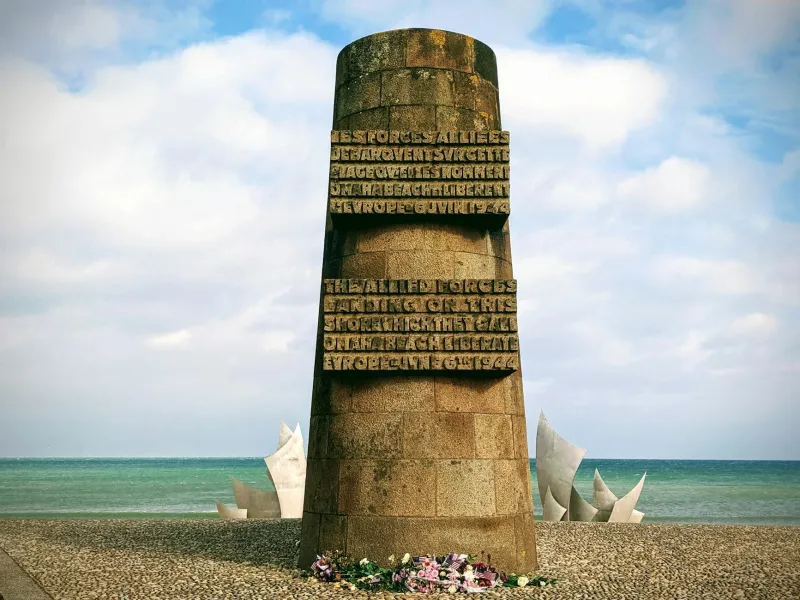
 Photo: Elm Point, Minnesota, via www.minnesotaseasons.com
The mistake went unnoticed for nearly a century, creating one of the most peculiar diplomatic situations in North American history. When the error was finally discovered in 1908, it triggered an international incident that required intervention from both the U.S. State Department and the British Colonial Office to resolve.
When Straight Lines Aren't So Straight
The 49th parallel was supposed to be America's clean, mathematical border with British North America — a perfectly straight line running from the Lake of the Woods to the Pacific Ocean. But in practice, surveying such a vast distance with 1820s technology proved nearly impossible.
Geodetic surveyor David Thompson was tasked with marking the border through what would become Minnesota and Manitoba. Working with primitive instruments and facing brutal winter conditions, Thompson's team made numerous small errors that accumulated over hundreds of miles. Most of these mistakes were insignificant — a few feet here, a few yards there.
 Photo: David Thompson, via forgeimpact.org
But near the Red River valley, Thompson's calculations went seriously wrong. A combination of magnetic compass deviation, equipment malfunction, and simple mathematical error caused his survey line to drift nearly two miles north of the true 49th parallel. When Thompson's team marked the border with stone monuments, they inadvertently placed several square miles of American territory inside what would become Canada.
Elm Point sat right in the middle of this surveying no-man's-land.
Life in Limbo
The residents of Elm Point had no idea they were living in the wrong country. The community had been established in 1847 by German immigrants who believed they were settling in Minnesota Territory. They built farms, established a Lutheran church, and created a small but thriving agricultural community on what they assumed was American soil.
When Minnesota achieved statehood in 1858, Elm Point residents expected to become U.S. citizens automatically. Instead, they found themselves dealing with Canadian territorial officials who insisted the town fell under British jurisdiction. Confused but pragmatic, the residents went along with the situation, assuming the bureaucrats knew best.
"Our great-grandparents just wanted to farm and raise their families," recalled Martha Holstrom, whose family had lived in Elm Point since the 1850s. "They didn't understand borders and surveys. When Canadian officials came collecting taxes, they paid. When they were told to vote in Canadian elections, they voted."
The situation created countless small absurdities. Elm Point residents carried Canadian identification but considered themselves Americans. They celebrated Dominion Day alongside the Fourth of July. Their children learned British history in Canadian-funded schools while their parents told stories of the American Revolution.
The Bureaucratic Blind Spot
What makes the Elm Point situation even stranger is how thoroughly both governments ignored obvious signs of the mistake. Canadian officials regularly collected taxes from people with clearly American names and backgrounds. American postal workers delivered mail to addresses that were supposedly in a foreign country. Border guards waved travelers through checkpoints without questioning why an entire community seemed to exist in both countries simultaneously.
The confusion was compounded by the fact that official maps disagreed with each other. U.S. Geological Survey maps showed Elm Point in Minnesota, while Canadian government maps placed it in Manitoba. Railway companies, telegraph operators, and shipping companies all used different geographic references depending on which maps they consulted.
"It was like the town existed in two realities at once," explained Dr. James Morrison, a historian who studied the Elm Point case. "People lived their daily lives as Americans but participated in civic life as Canadians. Somehow, both governments managed to ignore this contradiction for almost a century."
The Day the Maps Collided
The error was finally discovered in 1908 during a joint U.S.-Canadian survey to resolve other border disputes in the region. When modern surveying equipment revealed the true location of the 49th parallel, officials were shocked to find an entire American community living two miles inside Canada.
Initial reaction from both governments was denial. Canadian officials insisted their maps were correct and that Elm Point had always been part of Manitoba. American diplomats argued that the community's cultural and economic ties clearly demonstrated its U.S. identity. Meanwhile, Elm Point residents found themselves at the center of an international controversy they barely understood.
The situation became a diplomatic nightmare. Canada had been collecting taxes from the community for decades and had invested in infrastructure improvements. The United States had a legitimate claim based on the original territorial boundaries and the residents' American heritage. Both countries faced the embarrassing prospect of admitting their border had been wrong for nearly a century.
When Diplomacy Gets Creative
Resolving the Elm Point situation required unprecedented diplomatic creativity. Traditional international law provided no framework for dealing with an entire community that had been accidentally "adopted" by the wrong country. The case dragged through diplomatic channels for three years while residents continued their strange dual existence.
The breakthrough came when Canadian Prime Minister Wilfrid Laurier proposed an unusual solution: a territorial swap. Canada would formally cede Elm Point and surrounding areas to the United States in exchange for American recognition of Canadian claims to several disputed islands in the Great Lakes.
The proposal required approval from the British Parliament, the U.S. Congress, and the governments of both Minnesota and Manitoba. Negotiations were complicated by the fact that Elm Point residents had developed genuine ties to both countries and weren't sure which citizenship they preferred.
The Choice Nobody Expected
In 1911, Elm Point residents were given an unprecedented choice: remain Canadian citizens or return to American jurisdiction. The decision split the community down the middle. Families who had prospered under Canadian agricultural policies wanted to stay. Others felt their American heritage was too important to abandon.
The final vote was decided by a single ballot: 64 residents chose to remain American, 63 preferred to stay Canadian. The narrow margin led to an even stranger solution — the community would be physically divided along family lines, with the international border running through the middle of town.
This arrangement lasted only two years before proving completely unworkable. Having an international border bisect a community of 127 people created impossible complications for everything from mail delivery to church services. In 1913, the Canadian government agreed to relocate the 63 residents who wanted to remain Canadian to a new settlement 20 miles north, while the remaining families officially became American citizens.
The Legacy of a Wandering Border
The Elm Point case led to the most comprehensive re-surveying of the U.S.-Canadian border in history. Between 1913 and 1925, joint teams used modern equipment to verify the location of the 49th parallel across its entire length, discovering and correcting dozens of smaller errors.
The case also established important precedents in international law for resolving territorial disputes caused by surveying errors. The "Elm Point Protocol" became a model for handling similar situations around the world, providing a framework for protecting the rights of people caught in boundary disputes.
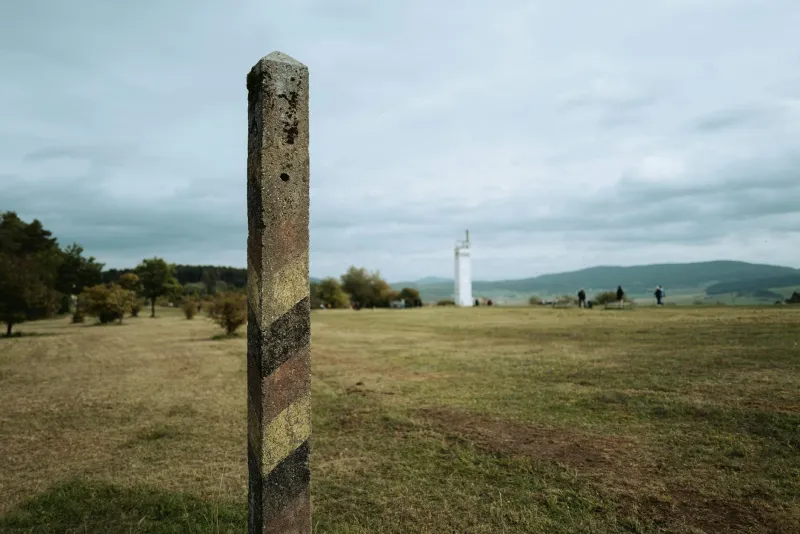
Today, Elm Point is an unincorporated community in Kittson County, Minnesota, population 47. A small historical marker notes the town's unique history as "America's Most Canadian Community." The marker stands exactly on the corrected 49th parallel, a reminder of the day when cartographic precision mattered less than the simple desire to farm, raise families, and build communities — regardless of which flag happened to be flying overhead.
The story of Elm Point serves as a peculiar footnote to the orderly process of nation-building, a reminder that even the most carefully planned borders can go astray when human error meets the messy realities of geography and politics.