When Liberation Became Another Kind of Prison
Most World War II prisoners of war have straightforward stories: captured by the enemy, held in a camp, eventually liberated by friendly forces. But Private Johnny McKenzie of the 101st Airborne had a different experience entirely. Over the course of thirteen months, he managed to become a prisoner of German forces, Soviet troops, and Allied military police — making him possibly the only American soldier to be detained by both sides of the war he was fighting.
His journey through three different military bureaucracies would remain buried in classified files for nearly fifty years, a footnote too strange for the official histories.
The First Capture: Business as usual
McKenzie's odyssey began in December 1944 during the Battle of the Bulge, when his unit was overrun by German forces near Bastogne. Along with dozens of other American soldiers, he was marched to a prisoner-of-war camp in eastern Germany.
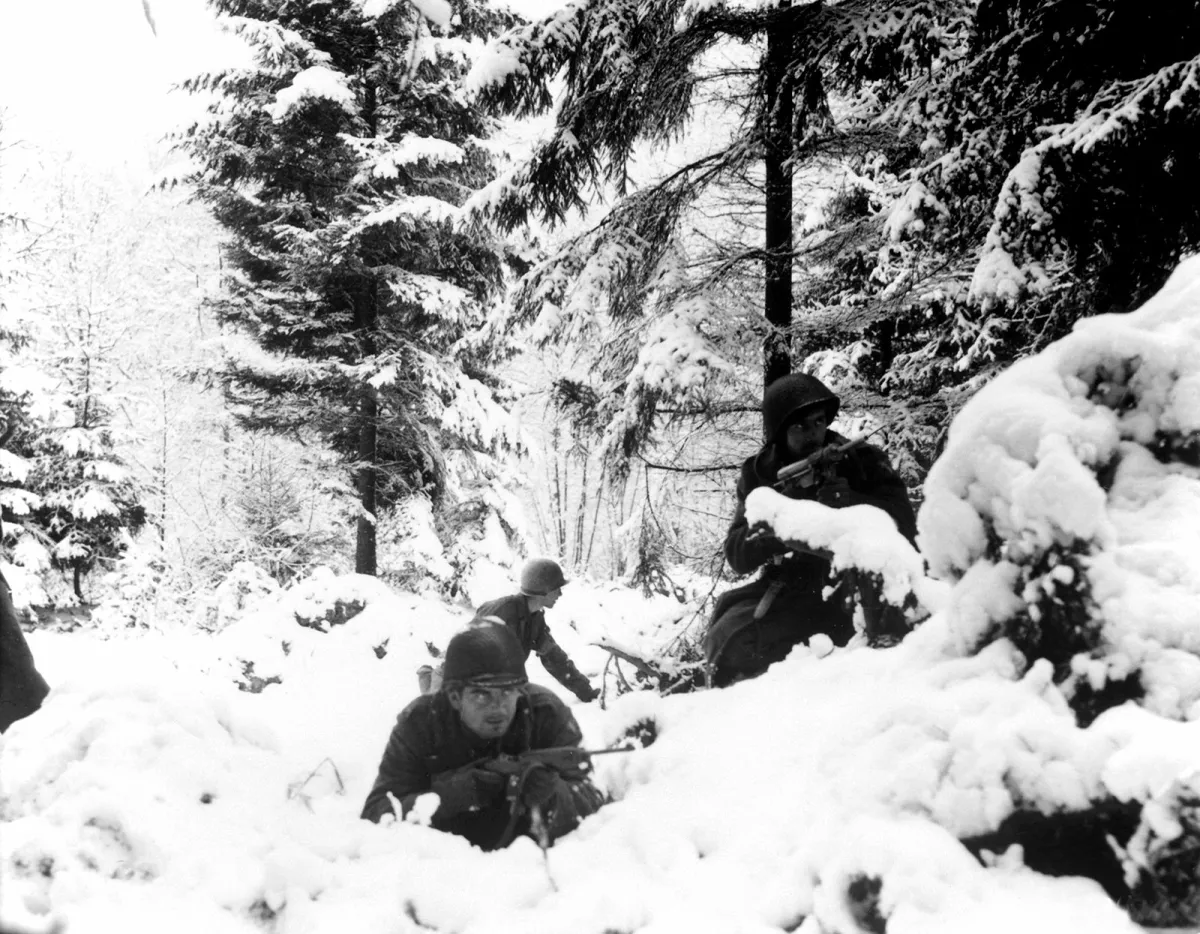 Photo: Battle of the Bulge, via cdn.britannica.com
For the first four months, McKenzie's experience followed the familiar pattern of POW life: poor food, harsh conditions, and the constant hope that Allied forces would break through German lines. He worked in camp details, received occasional Red Cross packages, and tried to stay alive until the war ended.
By April 1945, as Soviet forces advanced across Germany, the camp guards began preparing to evacuate their prisoners westward. But the rapid collapse of German resistance made organized evacuation impossible. On April 12, McKenzie woke up to find the guards gone and Soviet tanks rolling through the camp gates.
Liberation Day: The Problems Begin
The Soviet liberation should have been the end of McKenzie's captivity. Instead, it marked the beginning of a new kind of bureaucratic nightmare. The Soviet commander who took control of the camp spoke no English, and none of the American prisoners spoke Russian. More critically, the Soviets had no protocol for handling liberated American POWs.
What followed was a comedy of errors driven by wartime paranoia and administrative confusion. The Soviet commander, suspicious of any military-aged men in the area, decided to detain all former prisoners pending "verification" of their identities. McKenzie and his fellow Americans found themselves transferred from German prison barracks to Soviet detention facilities.
"We went from being prisoners of war to being... something else," McKenzie later recalled. "The Russians weren't hostile, exactly, but they weren't letting us go either."
Caught in the Soviet System
The Soviet detention wasn't malicious, but it was thorough. McKenzie and the other Americans were housed in a former German military facility while Soviet intelligence officers tried to figure out what to do with them. The language barrier made communication nearly impossible, and the rapid pace of military operations meant that dealing with displaced persons was a low priority.
For six weeks, McKenzie existed in a strange limbo. He wasn't exactly a prisoner, but he couldn't leave. The Soviets provided adequate food and medical care, but they also posted guards and required permission for any movement outside the facility. Meanwhile, Soviet bureaucrats exchanged cables with their superiors about the proper procedure for handling "liberated American military personnel."
The irony wasn't lost on McKenzie: he'd been liberated from a German prison camp only to find himself detained by his own allies.
The Third Detention: Allied Suspicion
In late May 1945, a joint Allied commission finally arrived to sort out the displaced persons situation. McKenzie expected to be quickly processed and sent home. Instead, he found himself facing a new set of suspicious officials — this time, his own countrymen.
The American military intelligence officers who interviewed McKenzie were deeply suspicious of any soldier who had spent time in Soviet custody. The early stages of the Cold War were already creating paranoia about Communist influence, and anyone who had extended contact with Soviet forces was considered a potential security risk.
McKenzie's story — captured by Germans, held by Soviets, now questioned by Americans — sounded too complicated to be believed. The intelligence officers assumed he was either lying about his experiences or had been compromised by Soviet handlers.
"They kept asking me the same questions over and over," McKenzie remembered. "What did the Russians want to know? What did I tell them? Had anyone tried to recruit me? I kept saying I couldn't even talk to them — we didn't speak the same language."
Bureaucratic Purgatory
What followed was two months of investigation, interrogation, and administrative review. McKenzie was held at a displaced persons facility in Germany while military intelligence officers verified his identity, checked his story against other witnesses, and tried to determine whether he posed a security risk.
The investigation was thorough but slow. Each detail of McKenzie's story had to be corroborated, each period of his detention documented, each contact with foreign personnel analyzed. The fact that he'd been held by both German and Soviet forces made the process exponentially more complex.
Meanwhile, McKenzie watched other liberated POWs get processed and sent home while he remained stuck in bureaucratic limbo. He'd gone from being a prisoner of war to being a prisoner of paperwork.
The File That Disappeared
McKenzie was finally cleared for return to the United States in July 1945, nearly eight months after Germany's surrender. But his unusual case had generated a thick file of reports, interviews, and investigative documents that military intelligence classified and filed away.
For decades, McKenzie's story remained buried in government archives. The official records of his unit listed him as "liberated by Allied forces" in April 1945, with no mention of his subsequent detentions. His family knew he'd had a "complicated" war experience, but the details remained classified.
It wasn't until the 1990s, when researchers examining Cold War intelligence files stumbled across McKenzie's case, that the full story emerged. His experience had been so unusual that it became a case study in how wartime bureaucracy could create absurd situations even for the people it was supposed to protect.
The Prisoner of Everyone
McKenzie returned to civilian life in Ohio, where he worked as a mechanic and rarely spoke about his war experiences. When he did tell stories, people assumed he was exaggerating or confused about the timeline. The idea that an American soldier could be detained by his own allies seemed too bizarre to be true.
But McKenzie's case wasn't unique — just uniquely well-documented. Thousands of American servicemen had complicated liberation experiences as the war ended and new geopolitical realities emerged. Most of these stories were never officially recorded, lost in the chaos of demobilization and the rush to return to peacetime.
A Footnote to History
Today, McKenzie's file sits in the National Archives, a reminder of how individual experiences can fall through the cracks of official history. His story illustrates the human cost of bureaucratic confusion and the way that wartime alliances could become peacetime complications.
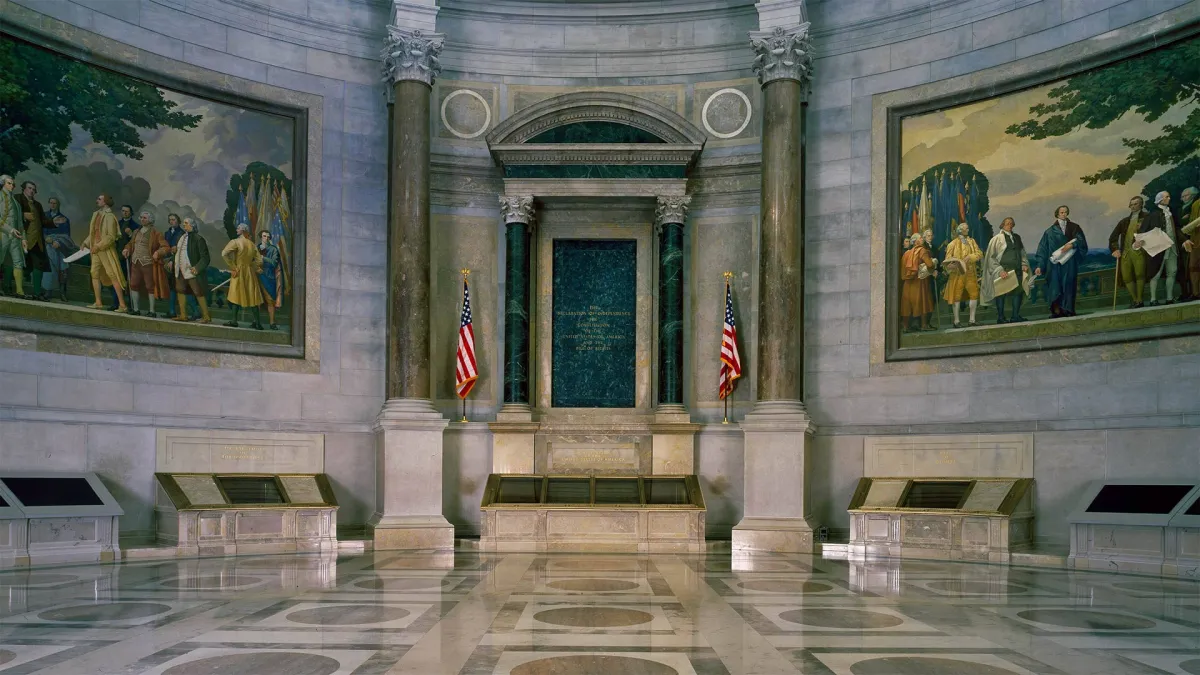 Photo: National Archives, via www.bwallpaperhd.com
For Johnny McKenzie, World War II didn't end with victory parades or homecoming celebrations. It ended with months of explaining to his own government why he'd been detained by everyone he'd encountered, friend and foe alike. In a war full of heroes and villains, he managed to become something else entirely: the prisoner of circumstance, bureaucracy, and the strange logic of military administration.